Radio Brisvaani

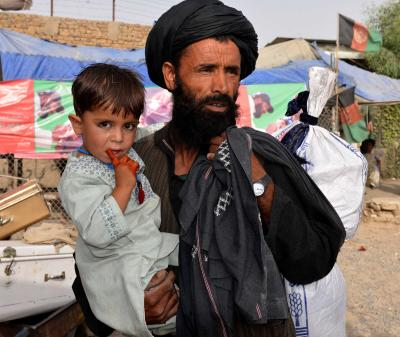
New Delhi, Jan 25 (IANS) Tens of thousands of residents have streamed out of Tirah Valley in northwestern Pakistan in recent days, cramming into overloaded vehicles and enduring gruelling journeys amid bitter cold, all to escape an impending army operation targeting the Tehrik-e-Taliban Pakistan (TTP) militants who dominate the strategic border region near Afghanistan, media reports said.
According to Radio Free Europe/Radio Liberty, the Pakistani military imposed a January 25 deadline for the evacuation of the valley, home to roughly 150,000 people, primarily from the Pashtun ethnic community.
As of late January 2026, around 80,000 individuals had already relocated to Peshawar, the capital of Khyber Pakhtunkhwa province, and surrounding areas, often leaving behind livelihoods, homes, and possessions.
Tehrik-e-Taliban Pakistan (TTP), or simply the Pakistani Taliban, is a Deobandi jihadist militant organisation that primarily operates along the Afghanistan–Pakistan border. It is designated as a terrorist organisation by the United Nations and by the Pakistan government.
Quoting Saeed Khan, a shopkeeper who hired a truck to move his extended family of 22, the report described the devastation; his business, once his sole source of income, now stands abandoned.
“That shop is gone now, and so are my earnings. What should I do now?” he lamented.
Many others share similar stories of loss and uncertainty.
The exodus has been marked by chaos and hardship.
Travellers face congested roads lined with multiple security checkpoints, turning what is normally a three-hour drive to Peshawar into a multi-day ordeal.
Freezing nighttime temperatures below zero, combined with shortages of food, water, and proper sanitation, have compounded the suffering, especially for families with women and children, the report said.
Citing another example, the report quoted Ihsanullah, who travelled with his relatives, recounted how one of his children fell ill en route. Despite pleas to security personnel to clear the road for medical help, he was told it was not permitted. The child later died.
Separately, on January 22, two children perished when their vehicle skidded off a snow-covered road and plunged into a ravine amid heavy snowfall, the report said, quoting him.
Upon reaching areas like Bara near Peshawar, displaced families must register with authorities to receive financial assistance – (Pakistani) Rs 250,000 (about $900) per family, intended to cover rent and essentials for the anticipated two-month duration of the operation.
For many in Tirah, this displacement is painfully familiar. The valley has endured repeated military campaigns since the early 2000s, following the US-led invasion of Afghanistan.
Gulalai, a 25-year-old woman, recalled her family’s first forced exit in 2010 during an anti-militant drive. They returned in 2019 only to find their homes in ruins, with no compensation provided.
“Now, once again, they issued a deadline asking us to vacate our houses,” she said. Opposition to the operation runs deep among locals, the provincial government, and political figures.
Opposition lawmaker Mahmood Khan Achakzai condemned the forced relocations in the parliament, calling it a form of “terrorism” to drive people from ancestral lands in such harsh conditions.
Khyber Pakhtunkhwa Chief Minister Sohail Afridi, from the Pakistan Tehrik-e-Insaf party, declared he had “never supported the operation,” describing it as imposed “by the barrel of a gun”.
According to the report, analysts point to a pattern of futility in these offensives.
Peshawar-based expert Riffatullah Orakzai told the news outlet that over the past two decades, there have been 22 major army operations in the northwest, yet militants often withdraw temporarily and return once troops leave.
Tirah itself was previously declared cleared of TTP presence, only to see a resurgence. The urgency stems from a sharp escalation in TTP-led insurgency.
According to the Pakistan Institute for Conflict and Security Studies (PICSS), 2025 saw 3,387 combat-related deaths—a 73 per cent jump from 1,950 in 2024 — marking one of the deadliest years in recent memory for civilians, security forces, and militants alike.
The Taliban’s 2021 takeover in Afghanistan has bolstered groups like the TTP through ideological ties and alleged safe havens, despite Pakistan’s expectations otherwise. Islamabad has accused Kabul of sheltering militants and has carried out cross-border airstrikes in response.
This latest displacement reflects broader frustrations with repeated military interventions that disrupt lives without delivering lasting peace. As families huddle in temporary shelters, the cycle of militancy, counter-operations, and civilian suffering continues in Pakistan’s volatile northwest.
–IANS
sktr/vd