Radio Brisvaani

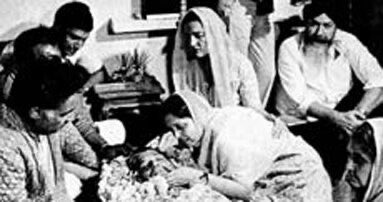
New Delhi, April 3 (IANS) Congress MP Manish Tewari on Friday paid tribute to his father V.N. Tewari, who was killed by terrorists at their residence in Chandigarh on April 3, 1984, and said that only some get to live and die for their convictions and therefore become eternal and immortal.
He further said that his father was only 48 years old at the time.
Taking to social media platform X, Tewari wrote, “On 3rd April 1984 – 42 years ago at our home in Chandigarh, terrorists assassinated my father Dr (Professor) VN Tewari. He was only 48 years old.”
Describing his father’s legacy, Tewari said that he was a scholar, author, poet, and parliamentarian who strongly advocated for Punjab.
“A scholar, author, poet and a Parliamentarian he espoused the cause of Punjab, Punjabi and Punjabiyat — the shared syncretic ethos of Hindus and Sikhs living together in harmony. Only some get to live and die for their convictions and therefore become eternal and immortal,” he said.
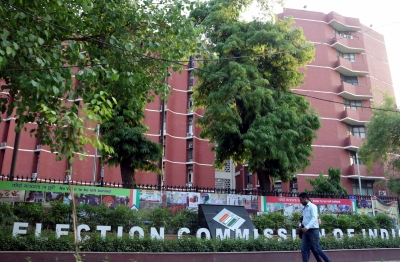
In 2019, Tewari, who contested the Lok Sabha elections from the Anandpur Sahib constituency had filed a complaint with the Election Commission of India and the Punjab Police regarding the circulation of a video on social media. The video falsely alleged that his father was involved in the 1984 anti-Sikh riots in Delhi and that petrol had been supplied from his filling station to fuel the violence.
Refuting the claims, Tewari had clarified that his father had been assassinated six months before the riots and had never owned a petrol pump. He had demanded a thorough investigation into the circulation of the video, urging authorities to identify and take strict legal action against those responsible for spreading misinformation.
V. N. Tewari, born in 1936, was a distinguished academic and a nominated member of the Rajya Sabha. He served as a professor of Punjabi and Modern Indian Literature at Panjab University, Chandigarh, and was widely respected for his contributions to literature and education.
He was married to Amrit Tewari, a professor and former Dean at the Postgraduate Institute of Medical Education and Research (PGIMER), Chandigarh. His life and work continue to be remembered for their lasting impact on academia and public life.
–IANS
jk/skp