Radio Brisvaani

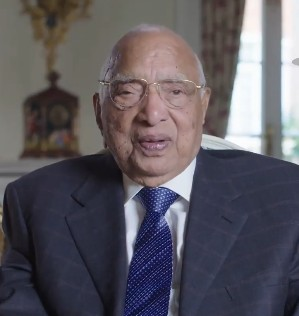
New Delhi, Jan 17 (IANS) Prominent industrialist M.L. Mittal passed away on Friday, January 16, 2026. His death has evoked deep sorrow across business and political circles, particularly for the rare personal anecdotes he shared about a young Narendra Modi—then an unassuming RSS pracharak and rising BJP leader—long before he entered the corridors of power.
Prime Minister Narendra Modi expressed his condolences on social media, writing: “Shri Mohan Lal Mittal Ji distinguished himself in the world of industry. At the same time, he was very passionate about Indian culture. He supported various philanthropic efforts, reflecting his passion for societal progress. Pained by his passing. I will cherish our various interactions. Condolences to his family and admirers.”
Mittal first crossed paths with Narendra Modi in 1998 during a United Nations-linked programme in New York focused on poverty alleviation and the ancient Indian ethos of “Vasudhaiva Kutumbakam” — the world as one family.
In a video shared on the ‘Modi Story, a popular social media handle on X, the industrialist recounted his thought-provoking experiences with the early days of Prime Minister Modi. Even at that early stage, Mittal was struck by PM Modi’s depth of knowledge and grounded approach. He spoke confidently of global outreach through RSS-affiliated branches and invited Mittal to join efforts in those countries as a model for others. What began as a professional encounter soon blossomed into a bond built on shared values of service and austerity.
Over the years, Mittal hosted him (PM Modi) during international visits, most memorably in Trinidad and Tobago around 25 years ago. With only four bedrooms in his apartment, Mittal offered his own air-conditioned room to the guest, but “Modi ji politely declined.” He chose instead a small utility room meant for ironing clothes—no air-conditioning, no attached bathroom. “For me, this is suitable,” he had said simply.
“Each morning at 5 a.m., Modiji would rise quietly,” prepare tea and breakfast for everyone—including senior karyakartas—before the household stirred. Such self-discipline and quiet consideration left an indelible mark on his host, Mittal had recalled. Later, when he served as the BJP national general secretary in Delhi, Mittal visited the modest MP quarters where he lived. Expecting some trappings of position, he found a basic servant room with no fan in the summer heat—only a hand fan—and “Modiji was writing under a dim light.”
When Mittal teased him about the perks of leadership, “Modi ji smiled and replied that the office held authority, but home remained a favour from the MP.” He fetched water himself, maintained a spartan routine, and during travels saved from his modest $25 daily allowance to return unused funds to party headquarters for public work.
“Food was equally austere: fruits when fasting, or simple jaggery and peanuts. This is my lifestyle,” he would explain to Mittal. Mittal often described these moments with quiet awe, emphasising that “Modi ji’s humility was not performative but innate” —a commitment to serve the commoner without fanfare. Even as responsibilities grew, the core remained unchanged; no hotels, preference for swayamsevaks’ homes, and a monk-like detachment from luxury.
In an era of rapid change, Mittal’s stories served as a touching reminder of the roots and values that shaped one of India’s most influential leaders. His passing leaves behind not just a void in the industry but cherished memories of a friendship forged in simplicity.
–IANS
sktr/uk