Radio Brisvaani

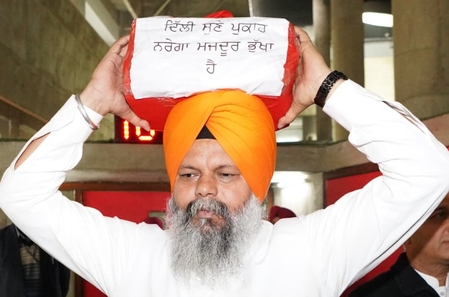
Chandigarh, Dec 30 (IANS) The Aam Aadmi Party in Punjab has launched a campaign to raise the voice and demands of more than 10 lakh MGNREGA worker families in the state.
AAP MLAs arrived at the special session of the Assembly here, carrying lakhs of letters written by MGNREGA workers. These letters narrate the pain and struggles of those hardworking families who sustain their lives through work under the Mahatma Gandhi National Rural Employment Guarantee Scheme (MGNREGA).
Even MGNREGA workers were present in the Assembly. The state government, led by Chief Minister Bhagwant Mann, has not limited these letters merely to being presented in the Assembly, but has resolved to send them directly to the Prime Minister.
The objective is to make the Central government aware of the real condition of the workers and to demand immediate solutions to their problems.
MGNREGA workers in Punjab are facing several serious issues. The biggest problem is the delay in payment of wages, which severely affects the livelihood of poor families.
In addition, many workers do not get to work on time, forcing them to face unemployment. The state government alleges that due to the Central government not releasing MGNREGA funds on time, the implementation of the scheme weakens, and workers suffer immensely.
Speaking in the House, Finance Minister Harpal Cheema today launched a scathing attack on the BJP-led Union government, pointing out that the Centre is systematically dismantling the MGNREGA (Mahatma Gandhi National Rural Employment Guarantee Act) scheme and stripping the poor of their right to a livelihood.
Speaking in support of a resolution against the recent changes and the renaming of the MGNREGA scheme to ‘Viksit Bharat — Guarantee for Rozgar And Ajeevika Mission (Gramin)’ (VB-G RAM G), Cheema labelled the move as an assault on the stomachs of the marginalised.
He read a poignant letter from a woman worker, Charanjit Kaur, which highlighted the fears of thousands of rural labourers. Her letter expressed the anxiety that changing rules and centralised village lists would deprive children of education and the elderly of medicine.
The Finance Minister emphasised that by centralising the scheme and moving to complex mobile-based attendance, the Union government is snatching away the guarantee of work that was once the backbone of rural survival.
–IANS
vg/dan