Radio Brisvaani

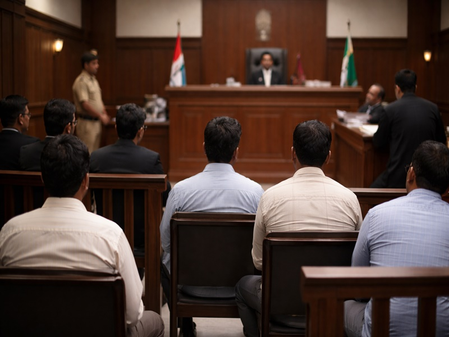
Jaipur, Feb 26 (IANS) The Rajasthan High Court on Thursday granted bail to five accused in the alleged Jal Jeevan Mission (JJM) case, including Piyush Jain, son of Padmachand Jain and operator of a firm, along with Mahesh Mittal, owner of tubewell company, and his son Hemant Mittal.
The Anti-Corruption Bureau (ACB) had arrested the accused in December 2025 in connection with the case.
During the hearing, the defence submitted that the FIR in the matter was registered in 2023 and the investigation had been ongoing since then. However, the arrests were made nearly two years later, allegedly without any new evidence being brought on record.
The defence argued that such a delay in arrest raised questions regarding the necessity of custodial detention and justified the grant of bail.
Counsel for the accused further informed the court that a charge sheet has already been filed and that the offences invoked carry a maximum sentence of seven years.
It was also argued that since the trial is likely to take a considerable amount of time, continued incarceration would not be justified.
The defence further submitted that there is no direct evidence of monetary transactions involving Piyush Jain.
While the ACB cited conversations between Padmachand Jain and Piyush Jain, the defence contended that there was no explicit reference to any exchange of money in those conversations, nor was any recovery made from him.
The prosecution had earlier recovered Rs 2.20 lakh in cash from Padmachand Jain’s car, terming the recovery suspicious and relevant to the ongoing investigation.
Padmachand Jain, Mayalal Saini, Pradeep Kumar, Rakesh Chauhan, and Malket Singh are among those identified as main accused in the case and are alleged to have been involved in demanding and accepting bribes.
These accused were granted bail on November 8, 2023, in connection with the same case.
With the High Court’s latest order, the five accused arrested in December 2025 have now secured bail, while the trial in the Jal Jeevan Mission case will continue in accordance with legal procedures.
–IANS
arc/pgh