Radio Brisvaani

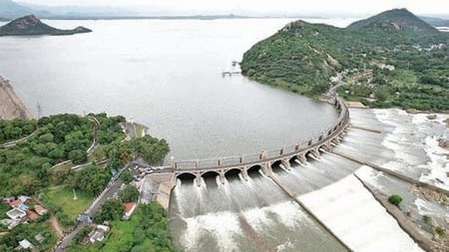
Chennai, Jan 27 (IANS) Tamil Nadu is heading into the summer months with significantly lower water reserves after a marginal dip in rainfall during the northeast monsoon, triggering concerns over drinking water availability across the state.
Data from the Water Resources Department (WRD) shows that the combined storage in 90 major reservoirs stood at 146.373 thousand million cubic feet (tmcft) as on Monday, nearly 20 per cent lower than the storage recorded during the same period last year.
The current storage accounts for 65.24 per cent of the total reservoir capacity of 224.343 tmcft. In contrast, reservoirs held 176.560 tmcft, or 78.72 per cent of capacity, during the corresponding period last year.
Officials attribute the shortfall primarily to below-normal rainfall in key catchment areas during the northeast monsoon.
The situation has worsened rapidly over the past few weeks. On January 2, combined storage was 168.418 tmcft, representing about 75.07 per cent of total capacity. In just 23 days, the state has used nearly 10 per cent of its stored water, reflecting both consumption and evaporation losses amid dry weather conditions.
Major reservoirs such as Mettur and Bhavanisagar have witnessed a steady decline in water levels due to poor inflows and the absence of sustained rainfall.
According to a senior WRD official, inflow into Mettur reservoir dropped sharply to 70 cusecs on Sunday, compared to 4,794 cusecs on December 1, 2025. “Over the past two months, inflows have consistently reduced. With dry conditions expected to continue, both water use and evaporation losses are likely to increase,” the official said.
Given the current storage trends, WRD officials have indicated that no water will be released for irrigation until June. The existing reserves, they said, must be prioritised exclusively for drinking water needs to ensure adequate supply through the peak summer months.
Another senior official noted that the dry spell is being used productively in some regions. “Desilting works have commenced in several small waterbodies, including lakes in the western and delta districts. This is an ideal time to accelerate and complete these works before the next monsoon sets in,” the official said.
With reservoir levels falling faster than usual, officials warn that careful water management and conservation will be critical in the months ahead.
–IANS
aal/dpb