Radio Brisvaani

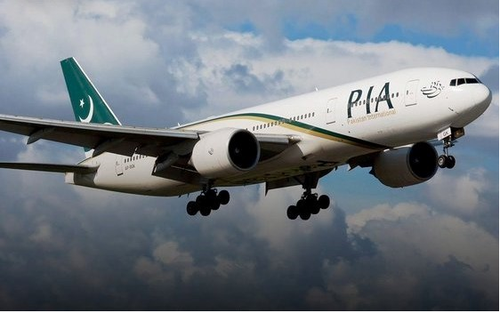
New Delhi, Jan 11 (IANS) The sale of Pakistan International Airlines has actually fetched the Pakistan government only Rs 10 billion, which is a fraction of the Rs 135 billion sale value that it has publicly announced, a Pakistani media report said.
“The most misleading economic decisions are not dishonest. They are technically correct, structurally complex and publicly celebrated, yet deliver almost nothing a treasury can use,” according to an article in the Pakistani daily The News International.
“If the government of Pakistan had announced that it received Rs 10 billion from the sale of Pakistan International Airlines, the public reaction would have been appropriately subdued. Ten billion rupees does not appear to constitute reform. So the government announced a different number instead: Rs 135 billion. The difficulty, inconvenient as it may be, is that the first number is the one that matters. Public finance, unlike press conferences, has a stubborn attachment to cash,” the article stated.
Pakistan’s sale of PIA did not significantly change the government’s balance sheet. What it changed was the narrative. Under the government’s chosen privatisation framework, only 7.5 per cent of the winning bid is paid to the state in cash. The remaining 92.5 per cent is contractually required to be reinvested in PIA as equity to stabilise operations. Applied to the widely celebrated Rs135 billion bid, this yields approximately Rs10.1 billion in actual fiscal inflow, which is a small fraction of the claimed amount. The rest never reaches the government’s treasury as it stays inside the airline, the article stated.
Pakistan’s annual interest payments now exceed several trillion rupees; the amount received from the PIA transaction would not meaningfully cover even a few days of debt servicing. It does not alter the country’s borrowing trajectory, improve its credit outlook, or buy time in negotiations with creditors. In macroeconomic terms, it is a rounding error disguised as reform. The problem is not that the cash inflow was small, but that it was presented as large enough to matter, the article lamented.
To be fair, this structure did not arise by accident. PIA could not be sold in its original form. The airline was deeply insolvent. Public disclosures placed its total liabilities at around Rs 800 billion, far exceeding its assets. Before any buyer could be persuaded to step in, the government absorbed or restructured a large portion of this debt, estimated at Rs 600 billion to Rs 670 billion. Those liabilities did not vanish. They simply moved, from the airline’s books to those of the public, the article pointed out.
It highlighted that this amounts to socialising losses before privatising control. “Sometimes it is the least bad exit. But it does have an implication that should not be controversial: once the state has already paid the bill, the sale price should not be mistaken for profit,” the article observed.
The article pointed out that at the stage of bidding for PIA, an all-cash bid of Rs 26.5 billion was rejected as it was lower than the winning bid of an apparent Rs 135 billion. However, this winning bid was in real terms fetched only Rs 10 billion for the government, which is much lower than Airblue’s all-cash bid of Rs 26.5 billion.
“In fiscal terms, the smaller bid would have paid the government more. This is not a matter of interpretation. It is arithmetic,” the article said.
At this juncture, defenders of the deal retreat to a different claim: that cash to the government was never the primary objective. The real goal, they argue, was to recapitalise PIA and keep it flying. But if that was the objective, then the transaction should be described honestly as a private recapitalisation with a change of control, not as a sale that strengthened the sovereign’s finances.
–IANS
sps/vd