Radio Brisvaani

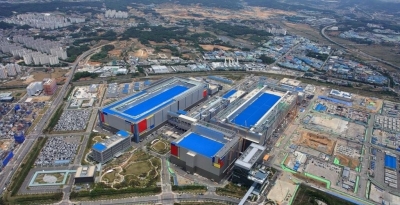
Seoul, Feb 8 (IANS) Samsung Electronics will begin mass production of the world’s first sixth-generation high-bandwidth memory, known as HBM4, later this month, industry sources said on Sunday.
The South Korean tech giant plans to start shipping HBM4 chips as early as next week, following the Lunar New Year holiday, for use in graphics processing units (GPUs) made by Nvidia Corp., the sources said. Nvidia’s GPUs are widely used in generative artificial intelligence (AI) systems, reports Yonhap news agency.
“Samsung, which has the world’s largest production capacity and the broadest product lineup, has demonstrated a recovery in its technological competitiveness by becoming the first to mass-produce the highest-performing HBM4,” said an industry source, who declined to be named.
The global HBM market is currently dominated by fifth-generation HBM3E chips, but industry observers expect HBM4 to emerge as a key technology. Nvidia plans to adopt HBM4 in its next-generation AI accelerator, named Vera Rubin.
Samsung has passed Nvidia’s quality certification process and secured purchase orders, the sources said, noting that the production schedule was finalised to align with Nvidia’s launch plans for Vera Rubin.
The volume of HBM4 samples supplied by Samsung for customer-side module testing has also increased significantly under the latest purchase order, the sources added.
Meanwhile, Samsung Electronics reported a record-breaking operating profit for the fourth quarter, touching the 20 trillion-won (US$13.8 billion) mark for the first time, driven by a supercycle in the chip industry.
The fourth-quarter operating profit marked a more than 200 percent rise from a year earlier, the company said in a preliminary earnings report.
If confirmed, it would mark the first time for the company’s quarterly earnings to reach the 20 trillion-won level.
Sales increased 22.7 percent to 93 trillion won. It was also the first time for the quarterly sales to surpass the 90 trillion-won mark.
The data for net profit was not available. The operating profit was 1.8 percent higher than the average estimate, according to a survey by Yonhap Infomax, the financial data firm of Yonhap News Agency.
—IANS
na/