Radio Brisvaani

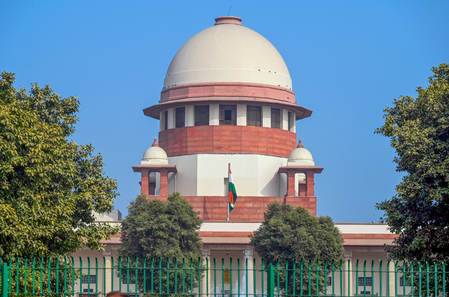
New Delhi, Jan 29 (IANS) The Supreme Court on Thursday reserved its verdict on a batch of petitions challenging the Election Commission of India’s (ECI) decision to conduct a Special Intensive Revision (SIR) of electoral rolls across several states and Union Territories (UTs).
A Bench of Chief Justice of India (CJI) Surya Kant and Justice Joymalya Bagchi concluded hearings on the matter, while issuing further directions to ensure transparency in the ongoing SIR exercise in Tamil Nadu.
The clutch of petitions challenged the legality of the voters’ list revision undertaken by the Election Commission of India, arguing that the exercise exceeds the poll body’s powers under Article 326 of the Constitution, the Representation of the People Act, 1950, and the rules framed thereunder.
The pleas questioned the ECI’s requirement that voters whose names were absent from the 2002 electoral rolls (or the 2003 rolls in some states) must prove ancestral linkage to a person whose name appeared in those rolls.
The poll body had initially specified 11 documents for the verification of identity. However, the Supreme Court later directed the inclusion of Aadhaar as an additional document.
Most of the petitions were filed in June last year following the ECI’s decision to carry out an SIR in Bihar. The exercise was subsequently extended to multiple states and UTs, including poll-bound West Bengal, Kerala, and Tamil Nadu.
Earlier this month, the CJI-led Bench had issued a series of directions regarding the SIR process in West Bengal, emphasising the need to prevent undue hardship to voters, particularly those flagged under the “logical discrepancies” category.
On Thursday, the Supreme Court issued similar directions with respect to Tamil Nadu, directing the ECI to publish the names of persons against whom “logical discrepancy” objections have been raised. It ordered that such names be displayed at panchayat bhavans, taluka offices and ward offices.
“The names of those who appear are allowed to submit documents in person or through authorised representatives within 10 days from displaying the list of logical discrepancy list, which will also contain a brief reason of discrepancy,” the court directed.
The CJI-led Bench observed that the poll body would strictly adhere to these directions wherever the SIR process is ongoing.
–IANS
pds/vd