Radio Brisvaani

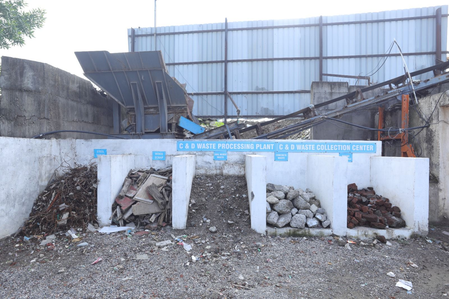
Gandhinagar, Jan 29 (IANS) Surat has taken a significant step towards becoming a zero-waste city, emerging as a national model for sustainable management of construction and demolition (C&D) waste and achieving 100 per cent recycling of construction waste and measurable reductions in carbon emissions.
Traditionally known for its diamond and textile industries, Surat is now being recognised for its environmental initiatives.
During the state government’s declared Urban Development Year, the Surat Municipal Corporation (SMC) has focussed on integrating modern infrastructure development with green growth and circular economy practices.
The city has set a target to ensure that all C&D waste generated is recycled, either at the site of generation or at designated recycling facilities, instead of being sent to dumping grounds.
Central to this effort is the construction and demolition waste recycling plant at Kosad, which operates under a Public-Private Partnership model.
The plant has a processing capacity of 300 metric tonnes per day and currently recycles around 80 metric tonnes of demolition waste daily. Materials such as bricks, concrete and iron fragments are scientifically processed and reused to manufacture products including crushed aggregates, recycled sand, paver blocks and concrete bricks.
According to official estimates, the complete recycling of construction waste has resulted in a reduction of more than 500 tonnes of carbon dioxide emissions annually, equivalent to saving approximately 2,50,000 kilograms of coal.
The initiative has also reduced pressure on the extraction of natural resources such as stone and sand.
Surat’s cleanliness performance has been reflected in Swachh Survekshan 2024, where the city secured the highest score in the country and continued its position in the Super Clean League.
The SMC has implemented Clean Construction Guidelines, becoming the first municipal body in India to do so.
Through e-governance platforms, citizens can register from home for the collection of construction waste, improving compliance and monitoring.
In a policy aimed at strengthening the circular economy, the SMC has made it mandatory to use up to 20 per cent recycled material produced at the plant in government tenders.
Officials say this move is expected to support the market for recycled products and encourage wider adoption of sustainable construction materials.
The Clean Construction Guidelines have also contributed to a reduction in air pollution, with mandatory use of barricades, sheds, sprinklers for dust control and green nets at construction sites.
Smart monitoring systems have led to a decline in citizen complaints related to dust and debris.
Since the Kosad plant began operations in 2018, the volume of C&D waste collected has steadily increased.
The city recorded collection of 65,746 metric tonnes in 2018–19, 37,457 metric tonnes in 2019–20, 10,614 metric tonnes in 2020–21, 23,315 metric tonnes in 2021–22, 41,451 metric tonnes in 2022–23, 49,381 metric tonnes in 2023–24 and 58,106 metric tonnes in 2024–25, all of which was recycled instead of being sent to dumping sites.
–IANS
mys/rad