Radio Brisvaani

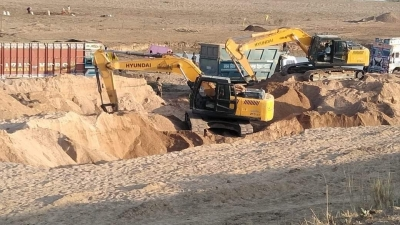
Chennai, Jan 28 (IANS) The Tamil Nadu government has amended key provisions of the Tamil Nadu Minor Mineral Concession Rules, 1959, introducing a refundable security deposit system for permission-holders seeking to remove sand and other minor minerals from lands and tanks under the control of various government departments.
The move is aimed at strengthening regulatory oversight, preventing excess quarrying, and ensuring the protection and restoration of waterbodies.
Under the revised rules, applicants seeking permission to remove sand or other minor minerals must now pay a refundable security deposit in addition to the application fee. The security deposit will be equivalent to two times the seigniorage fee payable for the quantity of mineral applied for.
At the same time, the government has significantly increased the application fee from Rs 1,500 to Rs 5,000. The amended provisions also redefine the procedure to be followed in cases where a permission-holder exceeds the permitted quantity of mineral removal or violates the conditions attached to the permission.
As per the new rule, the District Collector is empowered to cancel the permission after providing the permission-holder an opportunity to be heard. In such cases, the difference in the seigniorage fee and the cost of the mineral for the quantity quarried and removed will be recovered from the permission-holder.
Additionally, any expenditure incurred by the government for restoring tanks or other affected areas will be adjusted against the security deposit. If the total amount recoverable exceeds the deposited security amount, the balance will be recovered from the permission-holder under the provisions of the Revenue Recovery Act, 1890.
Earlier, the rules provided for automatic cancellation of permission if excess quarrying or violation of conditions was detected, with damages recovered based on the excess quantity removed and the extent of damage caused to the tanks.
The revised framework introduces a more structured process, including hearings and detailed recovery mechanisms, while placing greater financial responsibility on permission-holders.
The government has also inserted a new clause to ensure post-operation accountability. On the expiry of the permission period or upon exhaustion of the permitted quantity — whichever occurs earlier — authorities must inspect to verify compliance with the stipulated conditions.
A report of this inspection will be submitted to the concerned District Collector. Based on this report, the District Collector is required to pass a written order refunding the security deposit to the permission-holder, provided all conditions have been complied with.
The amendments are expected to act as a deterrent against illegal mining while ensuring better conservation of tanks and public lands.
–IANS
aal/skp