Radio Brisvaani

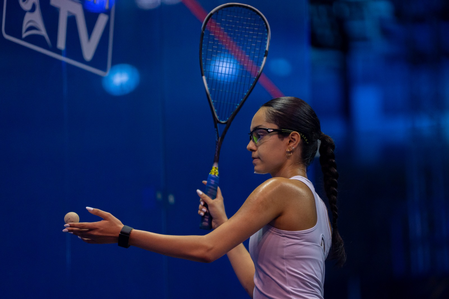
New Delhi, March 21 (IANS) Former India No. 1 Saurav Ghosal has set a bold benchmark for teenage sensation Anahat Singh, saying a place in the world’s top-10 should be the ‘bare minimum,’ while also calling for a structural overhaul of men’s and women’s squash to expand India’s talent base through mass participation.
Backing Anahat as a rare talent, Ghosal said the youngster possesses a near-complete game along with the right ecosystem to succeed at the highest level.
“Anahat is definitely an exception. She is brilliant in what she does. Her ceiling in terms of potential is very, very high. She’s done well now. She has a great mentality. Physically, she’s good. The only thing is we’re trying to make her a bit stronger, which will help her. But in terms of getting balls back and stuff like that, she’s really good,” Ghosal told IANS in an exclusive interview.
He highlighted her tactical awareness and composure as standout qualities, saying, “She has skill and understanding of the game and the variation of it, that she has a skill to do the variations, which is unique in terms of the game and the composure to do it. And on top of that, what she also has is she has the support and the guidance around her.”
Ghosal pointed to the strong support system around her, including former World No. 1 Grégory Gaultier, experienced coach Stéphane Galifi, and himself, as a key factor in her development.
“She has Grégory Gaultier, who’s the former world number one and world champion, who’s coaching her. Stéphane Galifi is a top player from before, who has been training her in India. I mentor her. So she has the perfect mix that she can hope for. You can’t get it better than this,” he said.
He set his expectations clear, and, at the same time, cautioned against placing undue pressure on the young player, stressing the importance of enjoyment in sustaining long-term success.
“If she continues to kind of listen, absorb, put the work in, stay focused, there’s no reason why, at the very least, she is not going to be a mainstay in the top 10 for a considerable period of time. She could go higher as well. But I’m just saying the top 10 is like a bare minimum. If she doesn’t do that, then something has gone wrong somewhere. Look, with Anahat, we should not put undue pressure on her. She enjoys playing. She genuinely enjoys playing. That is important for her to have throughout her career,” he said.
Turning to the broader Indian landscape, Ghosal said while the men’s game is showing encouraging signs, depth remains a concern, and stressed the need to build stronger competition within the country to push elite players further.
“In terms of the boys, look, in terms of the overall strength, this is the first time we have four in the top 50, which is a good sign. We don’t have someone who’s kind of saying that we have, like, a sort of Anahat sort of say in some ways, where like a top 10. But you never know, sometimes things change, people flower later. The only thing I would say is that we need to create more of a bench strength, both in the women’s and the men’s. Because outside the top three or four, we don’t really have so much pushing them from behind. And it’s always good to have as many players behind you, because that just makes you better,” he noted.
Drawing comparisons with global leaders, Ghosal pointed to internal competition in countries like Egypt and called for a mass-participation model, suggesting that squash should be introduced widely in public schools in India.
“Because you can train with these players daily. And Egypt has that. The world number one plays with the world number three, three plays with the five, it just makes everyone better. I would probably sit with the Indian sports ministry and the people who kind of, the education ministry, to find a way to get every single public school kid to try squash at some point in time in their early school life up to the age of like 12 or 13, and every single one should try it,” he said.
He believes such an approach could unlock hidden talent and create a pipeline of champions, adding that existing infrastructure, including schools like Kendriya Vidyalaya, could be leveraged as hubs to expand access.
“And I’m pretty sure that if we have the numbers trying it, we will have champions coming out. If we have champions, it’ll just breed more interest in the game, parents will get involved, thinking that, oh, we can become world champions or Olympic champions, and things like that. There are certain public schools, like Kendriya Vidyalaya, that actually do have squash courts in them already. So obviously that’s an easy fix. We should kind of almost like make each of these schools as satellite centres and get all the other schools in the nearby vicinity to come play it,” Ghosal explained.
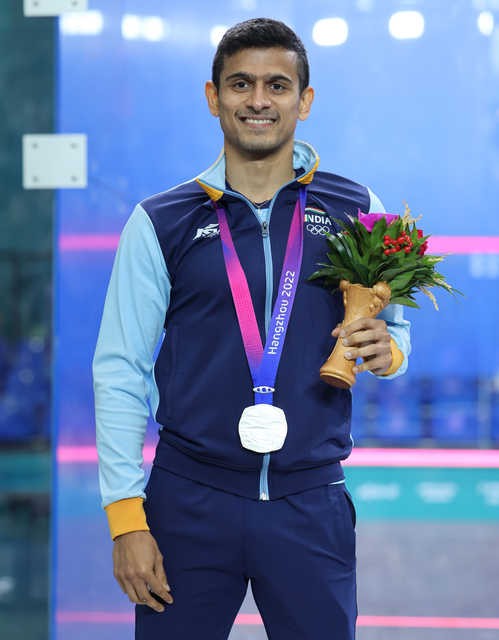
Reflecting on his own journey, Ghosal also spoke about how his understanding of success has evolved over time, moving beyond a win-loss definition. He cited his experience at the 2022 Asian Games as a turning point in perspective, after narrowly missing out on an individual gold medal.
“When I was growing up, everything, in terms of the definition of success, was basically defined by whether I won or lost. You either win or you lose. In the immediate aftermath, you feel like it’s all a waste, specifically like the last 12 months where everything was geared towards the Asian Games, and it’s come to nothing,” he said.
However, he added that reflection brought a deeper understanding of purpose.
“What I’ve come to realise is that at the end of the day, we do this because we love it. Would I, in retrospect, replace the time I spent on the squash court with something else, which would have made me happier? The answer was no,” he said.
Summing up his evolved outlook, Ghosal said fulfilment comes from the journey rather than just results. At the same time, he maintained that the hunger to win remains essential.
“If the answer to that question is no, and you’ve enjoyed that time, then you have basically fulfilled your life in that time period, which has been my definition of success. Of course, you do all this, you’re killing yourself, you want to win, and you should have a little bit of a distaste for losing, but that should be more of an outcome,” he said.
–IANS
vi/bsk/