Radio Brisvaani


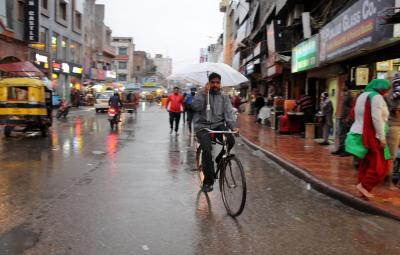
New Delhi, March 11 (IANS) The weather across the National Capital Region (NCR) has become increasingly distressing for residents, with an unusual combination of morning fog, rising daytime temperatures, and hazardous pollution levels worsening daily life. While thick fog in the early hours disrupted visibility and travel, the sudden surge in temperatures later in the day made conditions feel more like April than early March.
According to the India Meteorological Department (IMD), the region is expected to witness clear skies and dry weather over the next few days. The maximum temperature in Delhi was recorded at 37 degrees Celsius, while the minimum temperature stood at 18 degrees Celsius. Humidity levels also fluctuated sharply, dropping from 88 per cent in the morning to nearly 45 per cent later in the day.
The IMD has predicted that similar weather conditions will prevail on March 12 and 13, with maximum temperatures likely to hover around 35 degrees Celsius and minimum temperatures remaining close to 18 degrees Celsius. The early arrival of heat has added to the discomfort of residents who are already battling deteriorating air quality.
Amid the rising temperatures and foggy mornings, pollution levels across the NCR have reached alarming levels. The Air Quality Index (AQI) has crossed the red mark in several areas, entering the “very poor” and “severe” categories and raising serious health concerns. Experts warn that prolonged exposure to such toxic air can lead to respiratory issues and other long-term health complications.
Greater Noida has emerged as the worst-affected area. Knowledge Park-V recorded a shocking AQI of 429, placing it firmly in the “severe” category. Knowledge Park-III also reported extremely poor air quality with an AQI of 301.
In neighbouring Noida, the pollution situation remains equally worrying. Sector 116 recorded the highest AQI of 362, followed by Sector 125 with 335, Sector 1 with 304, and Sector 62 with 262. Ghaziabad, too, witnessed dangerous pollution levels, with Loni emerging as the most polluted area with an AQI of 358. Sanjay Nagar recorded an AQI of 334, Vasundhara 317, and Indirapuram 326.
In the national Capital, Chandni Chowk was recorded as the most polluted location with an AQI of 390. Anand Vihar followed closely with 388, while Bawana and Alipur both recorded AQIs of 312. Burari Crossing also reported a concerning level of 300. In comparison, Aya Nagar and the Cantonment area showed relatively better air quality, recording AQIs of 206 and 214 respectively.
Adding to the confusion, Delhi-NCR witnessed an unexpected layer of haze and fog on Tuesday morning despite rising temperatures. Some reports initially linked the phenomenon to fires triggered by attacks on Iran’s oil infrastructure, suggesting possible environmental effects. However, weather experts dismissed the speculation, stating that the haze was more likely caused by dust carried by winds from the Balochistan region and the Thar Desert in Rajasthan.
Meteorologists noted that similar fog and haze events have been recorded in March under certain atmospheric conditions in the past. Meanwhile, data from the IMD revealed that on March 8, Delhi’s temperature crossed 35 degrees Celsius — the earliest instance in at least 15 years — highlighting the unusually hot start to March this year.
With heat intensifying, fog reducing visibility, and pollution levels remaining dangerously high, residents across Delhi-NCR continue to struggle with worsening environmental conditions. Experts have urged authorities and citizens alike to take precautionary measures as the region navigates this challenging weather pattern.
–IANS
jk/rad