Radio Brisvaani

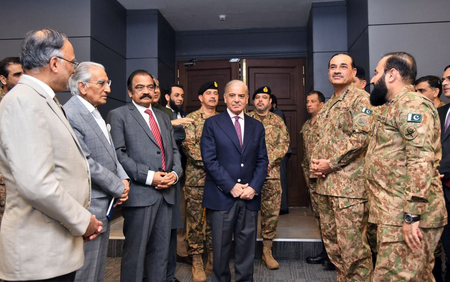
Islamabad, March 12 (IANS) Pakistan’s situation in the ongoing Middle East crisis shows that there is a bigger problem with how it runs its government. Modern states use a number of tools to project their power. This includes strong economies, diplomatic networks, technological capabilities, and institutional credibility. Pakistan, on the other hand, is finding it harder to do things with whatever it is left with after years of economic instability, weak institutional growth, and ongoing political instability. Consequently, Pakistan presently functions less as a multifaceted diplomatic entity and more as a security state, whose influence is predominantly derived from coercive power or its implicit threat. This structural imbalance is increasingly affecting how it runs its domestic affairs and how it acts on foreign issues.
Pakistan has been making desperate attempts to get close to US President Donald Trump, promising lucrative rare earth deals in the contested region of Balochistan. Despite massive criticism at home, it has also joined Washington on the ‘Board of Peace’. However, the situation has turned drastically after the US-Israel strikes on Iran leading to the assassination of Iranian Supreme Leader Ali Khamenei who was revered by Shia Muslims around the world.
Experts reckon that Pakistan’s diplomatic standing in Middle Eastern affairs is in shambles now. It cannot claim any moral high ground whatsoever and the current war exposes Islamabad’s strategic contradictions more starkly than any previous regional crisis.
Pakistan shares a long border with Iran and hosts a significant Shia population that reveres Iranian religious leadership. The killing of Khamenei, therefore, resonated strongly within Pakistan’s domestic political environment.
Within hours of Khamenei’s assassination, protests broke out in many cities in Pakistan. Protesters in Karachi were so angry that they tried to storm the American Consulate. They were angry at the US and Israel and showed how easily conflicts in the Middle East can spread to Pakistan’s streets. Pakistan’s economy still relies heavily on Western lenders and Gulf support, so there isn’t much room for open geopolitical adventurism. It got even more complicated when the Iranian officials hinted that Pakistan might back Tehran if Israel used nuclear weapons. Islamabad quickly denied the claim, saying again that its nuclear policy is only meant to deal with India and not with conflicts in the Middle East.
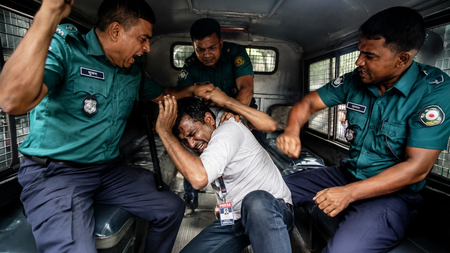
These domestic responses also unveil the underlying governance framework in Pakistan. When there are complicated political and sectarian tensions, the State often chooses to manage security instead of making political compromises. Islamabad’s main response has always been coercive containment, whether it was the long-running insurgency in Balochistan or the renewed threat from the Tehreek-e-Taliban Pakistan along the Afghan border. Not only is the use of force tactical, it is also structural. As civilian institutions deteriorate and the economy falters in providing stability, the security establishment increasingly serves as the primary means through which the State seeks to uphold order. Pakistan’s internal political management is similar to its external stance: issues that need political solutions are often dealt with through security measures.
Pakistan’s problems in the Middle East go back much further than the current crisis. For years, Islamabad has tried to keep up relationships with rival regional groups at the same time. Saudi Arabia and the Gulf monarchies are on one side. They have helped Pakistan financially during times of economic crisis. On the other side is Iran, a neighbour whose help is needed for border security and energy connections. Iran is also a great ally of China which has great stakes in Pakistan and has also been Islamabad’s patron for a long time. China-Iran bonhomie complicates Pakistan’s Middle East calculus very much. Finding a middle ground between these two extremes has led to a foreign policy that is more about uncertainty than leadership. The Saudi-led intervention in Yemen in 2015 was the turning point. When Riyadh asked Pakistan to send troops to help fight the Houthis, Pakistan’s parliament voted to stay out of the fight. The decision made sense at home because joining could have made sectarian tensions worse in Pakistan. People in Saudi Arabia, on the other hand, saw it as a betrayal. The lack of trust that started during the Yemen crisis has never fully gone away.
Pakistan’s weak economy has made its diplomatic options even fewer. Islamabad is becoming more and more dependent on financial help from Gulf States as its external debt grows and it keeps getting bailouts from the International Monetary Fund (IMF). Saudi Arabia and the United Arab Emirates have given Pakistan deposits many times to help keep its foreign exchange reserves stable and put off oil payments to keep the economy from going under. Such help will always have political effects. Pakistan’s policy toward the Middle East has become transactional, in effect. Islamabad often reacts to what its financial backers want instead of shaping the dynamics of the region. Pakistan’s comparative advantage in the region is tied to force. The danger, however, is that such a role reduces Pakistan to a contingency instrument for other States rather than an autonomous diplomatic actor shaping regional outcomes. This dependence is very different from India’s growing power in the area. In the last 10 years, New Delhi has changed the way it interacts with Gulf States through trade, technology partnerships, and investments in infrastructure. India’s economic ties with the Gulf are much stronger than Pakistan’s, which gives it a lot more diplomatic power.
The biggest threat to Pakistan is not diplomatic embarrassment, but the possibility that the conflict will spread. If unrest spreads across Balochistan, Iran’s ongoing conflict with Israel and the US could make Pakistan’s southwestern border less stable. The province is already dealing with separatist insurgency and political unrest caused by projects to extract resources. A long regional war could make militant groups near the Iranian border stronger and make it harder for energy and trade to flow. The security situation in Pakistan is already weak. The Tehreek-e-Taliban Pakistan’s return along the Afghan border has put a strain on military resources. A second line of instability along the Iranian border would make security on two fronts even more difficult.
The Iran–Israel conflict reveals a more profound reality regarding Pakistan’s strategic stance. States that have more than one way to use power can deal with crisis through diplomacy, economic pressure, or working with institutions. Pakistan is running out of these options more and more. Its economic instability limits its diplomatic freedom, and its internal instability keeps its political leaders busy at home. The only thing left is the security apparatus, which is strong enough to keep order at home and sometimes provides strategic services abroad, but not strong enough to change the political situation in the region. As long as this imbalance stays the same, Pakistan’s role in world politics will continue to be reactive and dependent, defined more by the limits of a State whose most reliable tool of power is still force than by strategic vision.
–IANS
scor/as