Radio Brisvaani

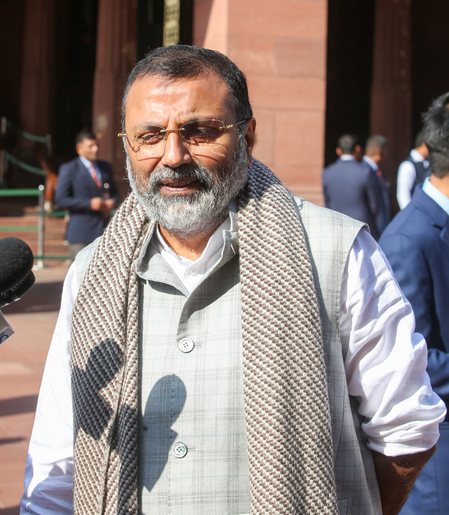
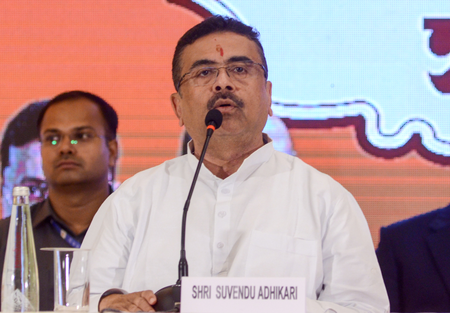
New Delhi, March 17 (IANS) BJP MP Nishikant Dubey on Tuesday sharply criticised the Congress party over what he described as its post-Independence “black deeds”, beginning with the events surrounding the escape of the 14th Dalai Lama from Tibet on March 17, 1959, during an uprising against Chinese rule, an episode that later strained relations between India and China.
India granted asylum to the Tibetan spiritual leader on March 31, 1959, a decision taken by the government of then Prime Minister Jawaharlal Nehru.
According to Dubey, the move fuelled resentment in Beijing and contributed to the deterioration of ties that eventually culminated in the Sino‑Indian War.
The BJP MP also alleged that China continues to occupy a large portion of Indian territory as a consequence of the conflict. He claimed that nearly 78,000 square kilometres of Indian land remain under Chinese control following the 1962 war.
In a post on the social media platform X, Dubey said he would begin a series of posts examining what he called controversial decisions taken by the Congress after Independence.
“Starting today, I am beginning a new daily routine task. After independence, the dark deeds of the Congress that impacted India’s political, social, and cultural history,” he wrote.
Referring to the events of 1959, Dubey added, “On March 17, 1959, on this very day, His Holiness the Dalai Lama fled from Tibet and arrived in India; in opposition to this very event, China launched its attack on India in 1962. Even today, China forcibly holds nearly 78,000 square kilometres of our land in its possession after that war. China became our neighbour only after this event.”
The remarks come as March 17 marks the anniversary of the Tibetan uprising, also known as the 1959 Tibetan Uprising or the Lhasa uprising. The movement was a major anti-Chinese protest and rebellion that erupted in March 1959 in Tibet, particularly in the capital city of Lhasa.
The uprising is widely regarded as a defining moment in modern Tibetan history as it triggered a severe crackdown by Chinese forces and ultimately forced the Dalai Lama to flee Tibet and seek refuge abroad.
On March 17, 1959, artillery shells reportedly landed near the Norbulingka Palace complex, the Dalai Lama’s residence in Lhasa. Some accounts also suggest that shells were fired in the direction of the Potala Palace area.
Fearing for his safety amid the escalating situation, the Dalai Lama decided to leave Lhasa that same night. According to historical accounts, he escaped in disguise, reportedly dressed as a soldier and carrying a rifle while keeping his face covered to avoid detection.
After several days of travel, the Dalai Lama and his entourage crossed into India near the Khinzemane in the Tawang region of present-day Arunachal Pradesh. The Indian government granted him political asylum, and he later established the Tibetan government-in-exile in Dharamsala in Himachal Pradesh.
The developments formed part of a broader geopolitical context that included China’s incorporation of Tibet in 1950, tensions along the disputed Himalayan border, and increasing mistrust between New Delhi and Beijing.
Several incidents between 1959 and 1962 further escalated tensions, including confrontations at Longju and Kongka Pass. India’s ‘Forward Policy’, launched in 1961, also involved establishing military outposts in disputed territories to assert territorial claims.
These developments eventually led to the outbreak of the 1962 war between the two countries, which ended with China gaining a military advantage.
–IANS
sd/dpb