Radio Brisvaani

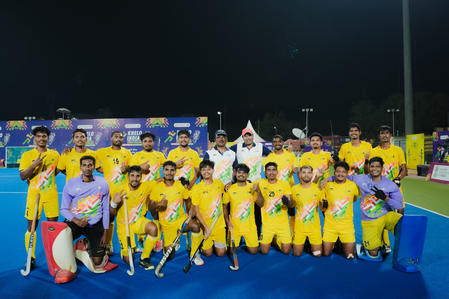
Raipur, April 2 (IANS) Odisha concluded its impressive campaign by winning both the men’s and women’s hockey gold medals at the Khelo India Tribal Games 2026 in Raipur, held at the Vallabhbhai Patel International Hockey Stadium. The men’s final saw Odisha beat Jharkhand 4-1, while the women’s final was a tight contest, with Odisha narrowly defeating Mizoram 1-0. Jharkhand’s men’s team earned silver; Chhattisgarh took bronze; and, in the women’s category, Jharkhand also claimed a well-deserved bronze to round out the podium.
At the Khelo India Tribal Games 2026 in Raipur, Odisha’s double gold in men’s and women’s hockey was more than just a sporting victory; it showcased how the game is transforming lives across the tribal regions of Odisha, Jharkhand, and Chhattisgarh. The northeastern states, renowned for their sporting talent, also shone, with Mizoram progressing to the knockout rounds at KITG 2026.
Odisha’s men’s team secured a decisive 4-1 victory over Jharkhand in the final, while the women’s team narrowly defeated Mizoram 1-0 in a tense championship match. Jharkhand and Chhattisgarh also earned spots on the podium, highlighting the growing talent from these areas. However, the true story extends beyond medals, reaching into villages, forests, and communities where hockey has become a symbol of identity and a source of opportunity.
Hockey has been a part of tribal culture for decades, with children making sticks from tree branches and playing barefoot on rough ground. While the talent was always present, the path to success was unclear. That is now beginning to change.
With Centres of Excellence managed by the Union sports ministry and states, along with enhanced infrastructure and organised grassroots programmes, a strong ecosystem is gradually forming. Former Olympian Ajit Lakhra, a member of the 1992 Barcelona Olympics Indian hockey team and now head coach at the Bilaspur Centre of Excellence, observes this transition firsthand and said, “The entire system, right from grassroots to junior and then senior levels, is gradually becoming stronger. Athletes from tribal regions, in particular, are benefiting greatly. Their natural talent is now being refined with proper guidance and training.”
Lakhra believes this structured support is creating a ripple effect. “When children come here, learn and perform well, they inspire others. This is creating a chain, with new players continuously emerging,” he said to SAI Media
Regions previously impacted by socio-economic issues and Naxalism are now experiencing a subtle change through sports. Hockey is becoming a unifying force, integrating communities into the national fabric. The sports ministry’s ASMITA programme is increasingly involving women players and helping them become part of the mainstream.
Former Olympian Manohar Topno, who competed in the 1984 Los Angeles Olympics and has coached both Jharkhand and Chhattisgarh men’s teams, emphasised the grassroots influence of programs such as the Khelo India Tribal Games.
“I would like to thank SAI for organising this grassroots tournament. The boys and girls from our communities are rising and rebuilding. If we continue like this, one day these players will represent India,” said Topno.
Topno also pointed to a simple but powerful truth behind the talent pool and added, “The reason is that our tribal communities play hockey naturally. If we focus on these regions, our players will grow and make the country proud.”
A major change has been the integration of sports science, physiotherapists, and video analysis—resources that were once exclusive to elite teams. Now, athletes from distant areas can access professional training facilities. This mix of natural, instinctive play and advanced coaching is opening up new possibilities for achievement.
Former Jharkhand athlete and Hockey India member Asrita Lakra highlighted how these changes are inspiring athletes.
“Hockey is deeply ingrained in the blood of kids in these regions, so they are naturally drawn to the sport. Platforms like Khelo India have given them direction,” Lakra said.
“With better facilities, training and exposure, players are now reaching the national level. Their morale has increased, and there is a visible improvement in performance,” she added.
The impact is now evident through tangible results, representation, and increased ambition. Tribal athletes have evolved from mere participants to contenders, champions, and future international competitors.
Odisha’s double victory at Raipur symbolises a broader movement where villages are emerging as hubs of excellence, and hockey is inspiring a new generation’s dreams. From dusty Bastar fields to bustling Raipur stadiums, these athletes’ journey is transforming Indian hockey and impacting the social fabric of tribal India.
–IANS
vi/bc