Radio Brisvaani

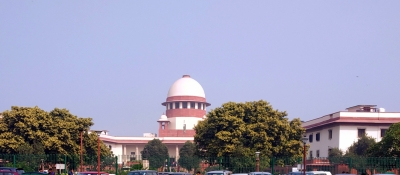
New Delhi, April 22 (IANS) The Supreme Court on Wednesday orally remarked that the alleged interference by West Bengal Chief Minister Mamata Banerjee in an ongoing Enforcement Directorate (ED) investigation had the effect of putting democracy “in peril”, observing that such actions cannot be brushed aside as a mere dispute between the state and the Union government.
A bench of Justice Prashant Kumar Mishra and Justice N. V. Anjaria was hearing petitions filed by the ED seeking registration of a CBI FIR against Banerjee and senior West Bengal Police officials over alleged obstruction during search operations at the office of political consultancy firm I-PAC in Kolkata.
During the hearing, the apex court expressed strong disapproval of the alleged conduct, remarking that a Chief Minister walking into the midst of an investigation could undermine democratic functioning.
“Any Chief Minister of any State walks in the midst of an inquiry or an investigation… you see, make the democracy in peril and then argue that it’s a dispute essentially between the State and Centre?” the Justice Mishra-led Bench orally observed.
It seemed unconvinced by the argument that the issue could be characterised as a federal dispute.
“This is not per se a dispute between the State and the Union. This is, per se, an act committed by an individual who happens to be the Chief Minister of a State, keeping the whole system and democracy in jeopardy,” it added.
Senior advocate Meneka Guruswamy, representing state police officials, questioned the maintainability of the ED’s plea under Article 32, contending that a writ petition is available only to individuals and not to government departments, and that the matter should instead be pursued under Article 131 as an inter-governmental dispute.
She also described the case as raising a “unique proposition of law”.
However, the bench remained unconvinced, observing that merely raising a question of law does not justify referring every matter to a larger Bench.
“In every petition, there will be some question of law. That does not mean every Article 32 petition is referred to a five-judge bench,” the apex court said.
Senior advocate Abhishek Manu Singhvi, appearing for the West Bengal government, contended that the ED cannot seek relief under Article 32 on the ground of violation of fundamental rights.
The apex court was hearing a batch of petitions arising out of allegations by the ED that its officials were obstructed during searches conducted earlier this year. The federal anti-money laundering agency has sought directions for registration of FIRs and transfer of the probe to the CBI.
In an order passed on January 15, the Supreme Court had stayed the FIRs registered by the West Bengal Police against ED officials in connection with the searches, and had also directed the preservation of CCTV footage and other digital storage devices containing recordings of the searched premises and the surrounding areas.
Meanwhile, in her counter-affidavit, Chief Minister Banerjee has denied all allegations of interference and obstruction, asserting that her limited presence on the premises was solely to retrieve confidential and proprietary data belonging to her Trinamool Congress.
According to the affidavit, CM Banerjee visited Pratik Jain’s residence at Loudon Street and I-PAC’s office in Bidhannagar on January 8, 2026, after receiving information that sensitive political data of Trinamool was being accessed during the searches.
She maintained that the data was “vitally linked to the AITC’s strategy for the upcoming Legislative Assembly election”.
The affidavit stated that when she reached the premises, she “politely requested the officials of the Enforcement Directorate to be allowed to retrieve the Party’s data and the devices they were stored in and files containing prints of the same”.
It further claimed that “the officers of the Enforcement Directorate present thereat did not object to this request and permitted her to retrieve some of these devices and physical files”.
“After she had done so, the Answering Respondent (CM Banerjee) left the premises so as not to inconvenience the officials of the Enforcement Directorate in any way,” the counter affidavit said, adding that the ED’s own ‘panchnamas’ record that the searches continued thereafter and were conducted “peacefully and in an orderly manner”.
CM Banerjee has also argued that neither the Trinamool nor its officials are accused in the alleged coal scam, and therefore, the ED cannot claim any right to the party’s proprietary data.
The counter affidavit has further accused the ED of acting with mala fide intent, alleging that the searches were carried out in the run-up to the 2026 West Bengal Assembly elections and after a prolonged period of inaction.
It has questioned the timing of the operations, claiming they coincided with I-PAC possessing “critical documents”, including a proposed list of candidates for the upcoming polls.
Alleging violations of statutory safeguards under the Prevention of Money Laundering Act (PMLA), the affidavit also states that the ED failed to produce any audio or video recordings of the searches. This, it claimed, raises a “strong presumption” that the searches were clandestine and aimed at accessing confidential political data.
–IANS
pds/vd