Radio Brisvaani

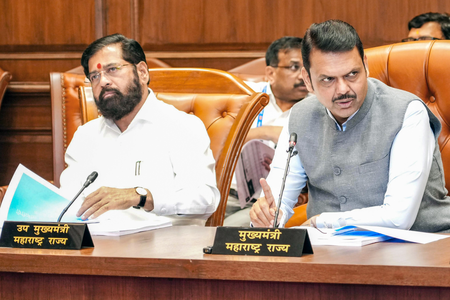
Mumbai, April 22 (IANS) In a move towards sustainable waste management and energy self-reliance, the Maharashtra Cabinet chaired by Chief Minister Devendra Fadnavis on Wednesday approved the ‘Maharashtra State Compressed Biogas (CBG) Policy 2026.’
The policy aims to tackle the rising challenges of urban waste and agricultural residue by converting them into clean, renewable fuel.
Maharashtra currently generates approximately 24,500 metric tonnes of municipal solid waste daily from 423 urban local bodies. Despite a large portion being organic, very little is currently converted into compost or biogas, leading to severe air pollution and groundwater contamination at landfills.
Additionally, over 20 million metric tonnes of agricultural residue are burned or wasted annually in the state. The new policy seeks to bridge this gap by mandating the source segregation of waste into organic and inorganic categories, said the government release.
The policy is designed to achieve multiple environmental and economic goals. The policy proposes to increase CBG production for industrial, transport, and domestic use, contribute to India’s 2070 Net-Zero carbon emission target, boost investment, entrepreneurship, and employment within the bioenergy sector and utilise Napier grass on wetlands and fallow lands in Marathwada for high methane yield.
To ensure financial viability, CBG projects require at least 200 tonnes of segregated organic waste per day. Consequently, the small urban local bodies will be grouped into clusters to support collective projects, with an aim to establish one project per Taluka.
Farmer Producer Organisations (FPOs) will supply supplementary raw materials like sugarcane residue, soybean waste, and livestock manure. A dedicated portal and mobile app will connect developers, farmers, and waste collectors.
According to the Cabinet decision, the Urban Development Department will serve as the state-level nodal agency, overseeing tenders and financial viability. A State-Level Steering Committee, chaired by the Chief Secretary, and District Committees, led by District Collectors, will manage approvals and land allocation.
The state government has proposed a provision of Rs 500 crore for Viability Gap Funding for the 2026-27 period. Projects can receive up to Rs 10 crore in subsidies based on capacity.
Projects will be implemented via Public-Private Partnership or Hybrid Annuity Modes. Local bodies will provide tipping fees per ton of waste, and the state will ensure priority electricity and water supply to these units. The policy remains synchronised with national schemes like SATAT, GOBARdhan, and the Swachh Bharat Mission.
–IANS
sj/rad