Radio Brisvaani

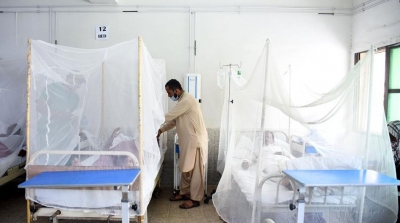
Islamabad, June 1 (IANS) Free medicines will likely not be available for patients in three government hospitals of Pakistan’s Rawalpindi as the Health Department has not yet released funds requested by hospitals, local media reported.
Holy Family Hospital’s (HFH) Satellite Town has stated that Punjab government has not yet released the amount requested by the hospital, leading Pakistani daily Dawn reported.
“Holy Family Hospital (HFH) Satellite Town, Benazir Bhutto Hospital (BBH) Murree Road and Rawalpindi Teaching Hospital (RTC) Raja Bazaar had demanded Pakistani Rupees (PKR) 4.5 billion budget for the fiscal year 2025-26. However, the Punjab government released PKR 2.5 billion and promised to provide the remaining amount of Rs2 billion in May 2026. It did not release the amount so far and vendors have refused to provide more medicines without being paid,” Dawn quoted HFH’s senior official as saying.
He said HFH, BBH and RTC bought medicines till June 30. However, he mentioned that no funds were available to pay to distributors and vendors for the supply of more medicines. He said, “If funds are not released, the distributors will not provide medicines for the next month.”
The senior official said HFH had requested for PKR 1.5 billion for buying medicines but were provided PKR 400 million. Benazir Bhutto General Hospital (BBGH) also requested for PKR 1.5 billion and government released only PKR 380 million. RTC sought PKR 1 billion, however, it was provided PKR 250 million, Dawn reported.
He said, “The situation will deteriorate in coming days when the hospitals will not provide any free medicines to patients.” He stated that Punjab government had ordered the hospitals to provide free medicines to outdoor, indoor, emergency and admitted hospitals. However, he noted that inadequate funds will impact the free medicine programme and people would criticise the government and the hospital administration.
Last month, the WHO’s Global Hepatitis Report 2026 revealed that Pakistan is the single largest contributor to the number of people living with hepatitis C in the world, even as field reports from different parts of the country revealed continued availability of banned reusable syringes and fake auto-disable syringes in the market, which experts fear can cause transmission of hepatitis B, hepatitis C, and HIV, when used repeatedly by unqualified practitioners.
Pakistan is among the 10 nations that accounted for 58 per cent of the world’s hepatitis C-linked deaths in 2024. The WHO has said that global progress in eliminating hepatitis is slow, with 1.34 million people losing their lives due to hepatitis B and C. On hepatitis C, the report stated that the global burden is caused by historical transmission, unsafe medical practices and injecting drug use, with gaps in diagnosis and treatment access impacting the extent to which the burden has been lowered, according to the report in Pakistan’s daily The News International.
“These drivers suit Pakistan to a tee, with recent field reporting from different cities finding continued availability of banned reusable syringes and fake auto-disable syringes, which experts fear can fuel transmission of hepatitis B, hepatitis C and HIV when used repeatedly by unqualified practitioners. Health experts also say unnecessary injections and quackery remain common in Pakistan, and infection prevention practices are poorly enforced in both formal and informal healthcare settings,” an editorial in The News International stated.
–IANS
akl/as