Radio Brisvaani

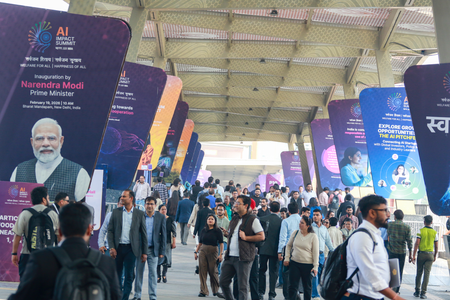
New Delhi, June 14 (IANS) If India can combine its talent advantage with stronger research and development (R&D) and continued skilling, the country can become a very important contributor to the global AI ecosystem, says Arundhati Bhattacharya, President and CEO, Salesforce South Asia.
India has the talent, digital infrastructure and entrepreneurial energy to become a leader in AI.
“A lot of innovation will come from India’s unique requirements, whether it is multilingual AI, cost-efficient models, or solutions that can work at enormous scale. At the same time, we need to do much more on R&D. Talent alone is not enough; we need stronger focus on research, greater collaboration between industry, academia and government, and a sustained focus on innovation,” Bhattacharya told IANS.
In an AI-first world, the most durable asset isn’t a technical skill; it’s curiosity.
“And if there’s one thing I’ve learned from my own non-linear journey — from an English Literature graduate to leading one of the world’s fastest-growing tech regions — it’s that the willingness to pivot, to learn, to stay curious, is what defines a lasting career. The future of work isn’t about surviving AI. It’s about having the courage to lead it,” she explained.
According to her, the most important skill today is the ability to keep learning. Domain expertise will continue to matter, but people also need to become comfortable working with AI because it is becoming part of everyday work across industries.
“At the same time, human judgement, creativity, communication and empathy will become even more valuable because these are the capabilities that complement AI. Some skills will sunset, new ones will emerge, and many of the jobs of the future do not yet have names,” Bhattacharya told IANS.
At Salesforce, “we believe in being customer zero. We use our own technology extensively before taking it to customers. For example, when we introduced an agentic layer into help.salesforce.com, our first-call resolution rate improved from around 44 per cent to over 84 per cent. It reinforced for us that when the data, context and governance are right, AI can deliver measurable business outcomes,” she noted.
The company is committed to helping skill one million people in AI by 2030 through partnerships with AICTE, government initiatives, educational institutions and its broader ecosystem.
Salesforce’s Hyderabad Centre of Excellence has completed a decade. Today, “we are 17,000-plus across seven locations, and India is the second largest R&D centre globally after the US. Those numbers reflect a journey that has been quite significant,” she said.
–IANS
na/