Radio Brisvaani

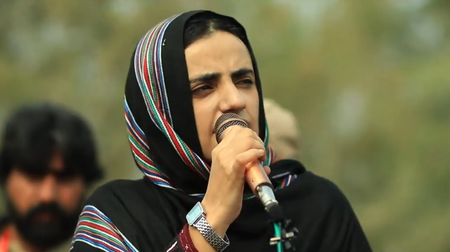
Islamabad, June 22 (IANS) A Pakistani Anti-Terrorism Court on Monday sentenced four activists, including Baloch Yakjehti Committee (BYC) leader Mahrang Baloch, to life imprisonment in connection with a case relating to the killing of a Frontier Corps official, local media reported.
Citing the court verdict, The Balochistan Post reported that the case stemmed from an incident that occurred during the ‘Raji Machi’ gathering in Gwadar district, in which FC officer Shabbir Baloch lost his life.
The prosecution argued that the official was allegedly attacked with stones by a crowd during the gathering, leading to his death.
Alongside Mahrang Baloch, the court also handed life sentences to Baloch Students Organisation (BSO) Chairman Balach Qadir, central leader Abu Bakr Kalanchi, and BYC leader Sibghatullah Shahji.
According to court documents, the trial was reportedly conducted in a special court established inside Quetta Jail due to security reasons.
Reports suggest that the case was filed following the Raji Machi gathering in Gwadar, with legal proceedings initiated against the accused over the death of the FC official.
Meanwhile, the verdict has sparked widespread criticism from rights activists and Baloch groups, who have questioned the fairness of the proceedings and the conduct of the trial.
Condemning the ruling, the BYC said that the sentencing of Mahrang and others to life imprisonment reflects “an expression of hatred” against the Baloch people by Pakistani authorities.
“There was no legal basis in this case. If even a single acceptable piece of evidence had existed, at the very least it could have been said that the trial should proceed. There are two separate FIRs for this one case, where not a single solid piece of evidence exists, where the proofs are dubious, and where the FIRs contradict each other; therefore, to pronounce a sentence of life imprisonment is not justice but tyranny—and this is no ordinary tyranny, but an open state and judicial tyranny,” read a statement issued by the BYC.
“How is it possible that a single FC official, according to one FIR, dies on July 27 and, according to the other FIR, dies again on July 29? How can a person die twice? When the very foundation of the case is so contradictory, dubious, and unreliable, then to impose life imprisonment on public leaders on such a basis is not the rule of law but the funeral of the law,” it added.
Sammi Deen Baloch, a member of the BYC, said that the alleged transfer of the cases against these leaders to a “faceless trial” was accompanied by sustained pressure from prosecutors on the judges to expedite the proceedings and deliver a verdict.
She claimed that the conduct of the court made it clear that the judicial process was geared towards “predetermined punishments” rather than justice.
“On the very day our comrades’ cases were transferred to a faceless trial, the prosecution relentlessly pressured the judges to expedite the trial and pronounce sentences, and the court’s evident impatience came to light; on that same day, we realised that it was not justice awaiting us, but predetermined punishments. But the Baloch nation will never forget the fact that to silence peaceful political voices, it was not only the police, law enforcement agencies, government, and intelligence agencies that were activated, but the halls of justice were also complicit in this process,” Sammi posted on X.
–IANS
scor/ksk/as