Radio Brisvaani

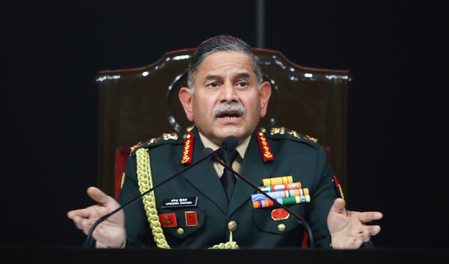
New Delhi, June 30 (IANS) Outgoing Indian Army Chief General Upendra Dwivedi stated on Tuesday that one of the major achievements of the force in recent times is Operation Sindoor, which has validated its “joint, integrated, and future-ready warfighting capabilities”, while showcasing the “collective strength” of India’s security framework.
Speaking exclusively to IANS, Gen Dwivedi said that Operation Sindoor also reinforced the importance of the Army’s transformation as an “integrated institutional process” and “multi-domain integration”.
The Indian Army Chief also spoke about the significance of self-reliance in national security and ammunition manufacturing, new battalions focused on evolving warfare, the situation along the Line of Actual Control (LAC), and the Agnipath scheme.
The following are the excerpts from the interview:
IANS: As the Chief of Army Staff, what do you consider your greatest achievement during your tenure? Is there any unfinished agenda that you would have liked to take further?
Gen Upendra Dwivedi: I have always viewed achievements as institutional accomplishments of objectives rather than personal milestones. Our focus has been on accelerating the ongoing process of transformation, strengthening jointness, promoting Atmanirbharta, absorbing emerging technologies and ensuring that the soldier remains at the centre of this journey.
If I had to identify major achievements of the Indian Army in the recent past, the foremost would be Operation Sindoor. It validated the joint, integrated and future-ready warfighting capability of the Indian Army. It was not the success of any individual; it reflected the collective strength of India’s national security architecture. Many transformational initiatives pursued over the years, including technology absorption, jointness, secure communications, multi-domain operations and precision engagement, were demonstrated in practice during the operation.
The second area has been the momentum imparted to the Decade of Transformation. During this period, the Army moved from discussing modernisation to implementing it. New capabilities and structures such as Rudra Brigades, Bhairav Battalions, Ashni Drone Platoons, Shaktibaan Regiments, Divyastra Batteries and Baaz Battalions have been progressed to enhance agility, surveillance, precision, reach and technology-enabled battlefield awareness.
The third area has been human resource management, welfare of all ranks and veterans’ outreach. We have focused on improving quality of life, strengthening grievance redressal mechanisms, digitising processes, enhancing welfare initiatives and improving outreach to veterans and their families.
As far as the unfinished agenda is concerned, the transformation of an Army is a continuous institutional journey. Some reforms, particularly those relating to doctrinal absorption, technology integration and human resource reform, require sustained and deliberate effort. The direction is clear, and the Indian Army is moving forward in the right direction.
IANS: The Army has been undergoing significant restructuring, accelerated since Operation Sindoor. What is the status of that transformation, and what is the next major priority?
Gen Upendra Dwivedi: The Indian Army’s transformation is being pursued as an integrated institutional process. Modernisation is no longer only about the induction of platforms. It is about capability development in which doctrine, structures, technology, training, Atmanirbharta and human resource policies move together.
Operation Sindoor reinforced the importance of this transformation. It demonstrated that success in future conflicts will depend on the ability to fuse intelligence, sensors, shooters, networks and commanders into a faster and more responsive operational system. It also underlined the importance of multi-domain integration, where land, air, cyber, space, the electromagnetic spectrum and the cognitive domain operate in a coordinated manner.
New organisations recently created within the Indian Army are part of this transformation. These are intended to make the Army more agile, precise, networked and responsive, while pushing technology closer to formations, units and soldiers at the cutting edge.
The current major priority for the Indian Army is absorption. It is not enough to induct new systems; they must be integrated into tactics, training, structures and command processes. Doctrine has to remain dynamic so that technology and organisation evolve together. Our aim is to create technology-enabled soldiers and formations that are networked, responsive and capable of operating in a multi-domain environment.
IANS: Can you elaborate on the purpose of the ‘Baaz Battalion ‘?
Gen Upendra Dwivedi: Baaz Battalions are an important initiative being progressed to strengthen the Army’s Remotely Piloted Aircraft capability. These battalions will be built upon the existing RPA Flights and will comprise a specialist pool of personnel trained to operate and manage the ecosystem of Remotely Piloted Aircraft. The purpose is to enhance Intelligence, Surveillance and Reconnaissance capabilities through integrated aerial surveillance, persistent battlefield awareness and rapid response.
IANS: Looking at recent developments along the Line of Actual Control in Eastern Ladakh and subsequent military-diplomatic engagement, what has been the Indian Army’s biggest lesson from the situation on the LAC? How would you assess the current security situation along the LAC?
Gen Upendra Dwivedi: The foremost lesson is that stability along the LAC requires constant vigilance, credible preparedness and sustained engagement through established mechanisms. The situation along the Northern Borders is stable, but sensitive. Disengagement agreements have contributed to improving stability on the ground, and both sides are showing greater responsiveness and sensitivity to each other’s concerns.
Local issues arising from differing perceptions of the LAC are addressed through military-to-military interactions, hotlines, flag meetings and commander-level engagements. More than a thousand ground-level interactions take place annually between the two sides, helping address routine border management issues and prevent misunderstandings.
At the same time, stability does not mean complacency. The Indian Army continues to maintain a robust deployment posture and remains prepared to respond to any contingency. Infrastructure development, surveillance, logistics, mobility and capability enhancement along the Northern Borders remain priority areas.
Our long-term approach is clear: maintain peace and tranquillity, resolve local issues through dialogue and established mechanisms while ensuring that we remain fully prepared to deal with all contingencies.
IANS: Atmanirbharta (Indigenisation) is a big mantra of the government, and the Army is also moving strongly in that direction. How do you view this initiative?
Gen Upendra Dwivedi: Atmanirbharta is now a core requirement of national security and future warfighting. In a crisis, the nation must be able to rely on its own systems, its own industrial base and its ability to sustain long-duration conflicts.
Indigenous systems have performed well and are becoming central to surveillance, communications, electronic warfare, precision engagement, information management and operational decision-making. Indigenous capability is no longer peripheral to military preparedness; it is increasingly becoming an essential part of it.
At the same time, we must realise that modern warfare is evolving rapidly and capability requirements will continue to emerge, especially in areas such as long-range precision fires, advanced munitions, drones and counter-UAS. The need for better systems for electronic warfare, resilient communications, AI-enabled decision systems, autonomous platforms and battlefield awareness will continue to increase. Therefore, it is important that the defence industry is prepared to deliver current and future requirements of the defence forces.
We need Indian solutions for Indian challenges because our terrain, threat matrix and operational requirements are unique. Our engagement with DRDO, DPSUs, private industry, MSMEs, startups and academia is aimed at faster trials, better hand-holding and quicker induction.
IANS: What is the Army’s actual assessment of the Agnipath scheme? Does the Agniveer model need any changes going forward? For instance, should the retention rate be increased beyond the current 25 per cent?
Gen Upendra Dwivedi: The Agnipath scheme is a major human resource reform aimed at creating a younger, fitter, more energetic and future-ready Army. The character of warfare is changing rapidly, and today’s soldier must be physically robust, mentally agile and technologically adept.
Initial feedback from operational units has been encouraging. Agniveers are adapting well to unit life, training standards and field requirements. Their ability to adapt to modern battlefield systems such as drones, surveillance systems, communication networks and other technology-enabled systems is a positive contribution.
At the same time, the scheme is still evolving. The first batch has not yet completed its full-service cycle, and therefore any final assessment would be premature. Indian Army is continuously analysing training outcomes, unit integration, operational performance and feedback from commanders across the Army.
Any refinement in future should be guided by operational requirements and field experience rather than predetermined numbers. If future assessments indicate the need for changes, particularly in specialised or technology-intensive domains such as air defence, drones, counter-UAS, signals, surveillance and electronic warfare, the matter can be examined institutionally.
–IANS
sd/dpb