Radio Brisvaani

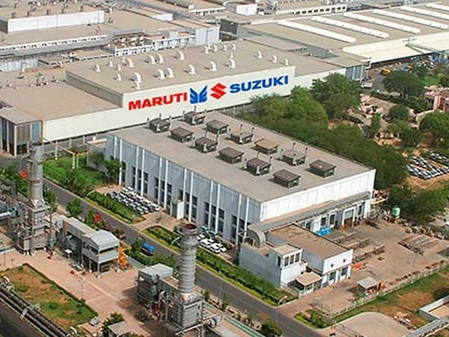
New Delhi, July 8 (IANS) Leading automobile firm Maruti Suzuki India on Wednesday said it has commissioned a 1 MWh Battery Energy Storage System (BESS) at its Kharkhoda manufacturing facility in Haryana as part of its efforts to strengthen renewable energy usage and reduce carbon emissions.
The company said the battery storage system has been integrated into the facility’s internal electricity distribution network on a pilot basis to optimise the utilisation of solar power generated at the plant.
It had commissioned a 20 MWp solar power project at the Kharkhoda facility in 2025.
However, during plant holidays and other low-demand periods, the electricity generated by the solar installation could not be fully utilised due to the absence of demand.
The newly commissioned BESS will store surplus electricity generated during such periods and make it available for use when required.
The system is also expected to improve grid stability, the company said.
Announcing the initiative, Hisashi Takeuchi, Managing Director and CEO, Maruti Suzuki India, said the company remains committed to supporting India’s efforts to build a self-reliant green energy ecosystem.
“The introduction of Battery Energy Storage System (BESS) at our Kharkhoda facility is part of these continued efforts. With a lifecycle of about 15 years, BESS will help to reduce nearly 54 tonnes of CO2 emissions annually,” he said.
Takeuchi added that while the company’s production volumes are expected to increase in the coming years, it remains committed to reducing Scope 1 and Scope 2 emissions, both in terms of carbon intensity as well as absolute emissions from manufacturing operations.
He said the company’s approach is aligned with parent Suzuki Motor Corporation’s environmental vision, which targets a 42 per cent reduction in Scope 1 and Scope 2 carbon emissions by FY31 compared with FY23 levels.
Earlier in July, the company inaugurated its most advanced vehicle manufacturing facility at IMT Kharkhoda in Haryana, with Prime Minister Narendra Modi and Japanese Prime Minister Sanae Takaichi jointly dedicating the plant through video conferencing during the India-Japan Joint Economic Forum here.
Spread across 800 acres, the integrated manufacturing complex has been developed with an adjoining supplier park and is designed to become one of the world’s largest vehicle manufacturing facilities when fully operational.
–IANS
ag/