Radio Brisvaani

New Delhi, May 21 (IANS) Doctors from the All India Institute of Medical Sciences (AIIMS) have urged people to take preventive measures against heat-related illnesses as soaring temperatures continue to impact several parts of the country.
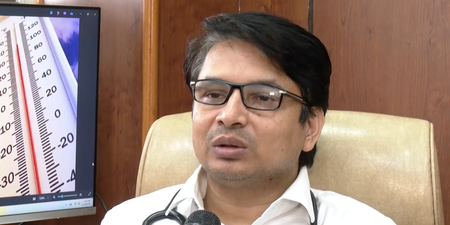
Dr Piyush Ranjan, Additional Professor in the Department of Medicine at AIIMS Delhi, said that cases of dehydration and heat stroke tend to rise sharply whenever temperatures increase.
“Whenever the temperature rises, health problems related to heat begin to appear. The first and mildest condition is dehydration, in which the body loses water and salts,” he said.
He warned that dehydration can progress to heat stroke, commonly known as ‘loo lagna’, and in severe situations, patients may even lose consciousness.
Highlighting precautionary measures, Dr Ranjan advised people to avoid stepping outdoors during peak afternoon hours.
“As far as possible, people should avoid going outdoors between 11 a.m. and 4–5 p.m., when temperatures are at their peak,” he said.
He added that if venturing outside is unavoidable, people should wear full-sleeved clothes, full-length trousers, and keep their heads covered with caps, scarves, or turbans. He also recommended the use of umbrellas and staying indoors, whenever possible.
Dr Ranjan stressed the importance of proper hydration before going outdoors.
“People should drink sufficient water before stepping outside. Ideally, one or two litres of water should be consumed before leaving home. While outdoors, people should also consume electrolytes or ORS to maintain the balance of water and salts in the body and prevent dehydration,” he said.
Dr Neeraj Nishchal, Professor in the Department of Medicine, said plain water alone may not be sufficient during extreme heat conditions because the body loses salts through sweating.
“It is important to understand that drinking only plain water is not enough, because during extreme heat, the body loses not just water but also salt through sweating. Therefore, ORS solutions or electrolytes are considered more beneficial,” he said.
He also suggested consuming traditional drinks and foods such as Bel ka Sharbat, shikanji, and lentil water to help the body stay hydrated during the heatwave.
According to Dr Nishchal, hospitals are witnessing a growing number of heatwave-related health complaints. The most common symptoms include dehydration, weakness, dizziness, headaches, excessive sweating, vomiting, and low blood pressure.
“In severe cases, heat stroke is being reported, where the body temperature rises dangerously high. Patients may suffer from high fever, unconsciousness, confusion, and sometimes even seizures,” he said.
He added that elderly people, children, pregnant women, and individuals suffering from illnesses such as diabetes or heart disease are among the most vulnerable groups during extreme heat conditions.
–IANS
sn/vd