Radio Brisvaani

Mumbai, Dec 17 (IANS) Amid rising public debt and widening revenue and fiscal deficits, the BJP-led Mahayuti government in Maharashtra expects at least a 600 per cent rise in state expenditure from the next fiscal with the implementation of the proposed Viksit Bharat — Guarantee for Rozgar and Ajeevika Mission (Gramin) (VB G RAM G) Bill, which seeks to replace the existing MGNREGA, if the legislation is passed by both Houses of Parliament.
As per data from the state’s Employment Guarantee Scheme (EGS) Department, Maharashtra has steadily increased its financial share in works undertaken under MGNREGA over the past five years, even as total expenditure has witnessed sharp growth. In 2020-21, total expenditure stood at Rs 2,020.96 crore, rising to Rs 2,422.75 crore in 2021–22, Rs 3,024.23 crore in 2022–23, Rs 4,460.83 crore in 2023-24, and Rs 5,972.23 crore in the 2024-25 fiscal.
“We expect the total expenditure for the ongoing fiscal to reach Rs 9,000 crore,” said a senior official overseeing the implementation of MGNREGA in Maharashtra.
In the ongoing fiscal, total expenditure already stands at Rs 5,207.08 crore. According to the provisions of the proposed Bill, the Centre-State expenditure sharing ratio for employment generation would shift to 60:40 from the earlier 90:10. With the state’s share earlier limited to 10 per cent, Maharashtra spent close to Rs 200 crore in 2020-21, Rs 240 crore in 2021–22, Rs 300 crore in 2022–23, Rs 446 crore in 2023-24 and Rs 597 crore in 2024-25, reflecting a steady upward trend. With a targeted total expenditure of Rs 9,000 crore, the state’s share for the ongoing fiscal may touch up to Rs 900 crore.
“As per the present form of the Bill, we expect to receive a budget allocation of around Rs 15,000 crore. With 40 per cent of the expenditure to be borne by the state, it would mean we will have to shell out at least Rs 6,000 crore if we are to utilise the remaining 60 per cent,” the official said, adding that this would amount to nearly a 600 per cent hike in state expenditure.
The official, however, maintained that the proposed increase in guaranteed workdays from 100 to 125 and the inclusion of works such as road and bridge construction under the new Bill could turn out to be beneficial for the state.
“There are schemes for road construction under the Rural Development Department for which the state currently bears 100 per cent of the cost. If such works are brought under the new Bill, once passed, it would reduce the state’s burden by around 60 per cent,” the official added.
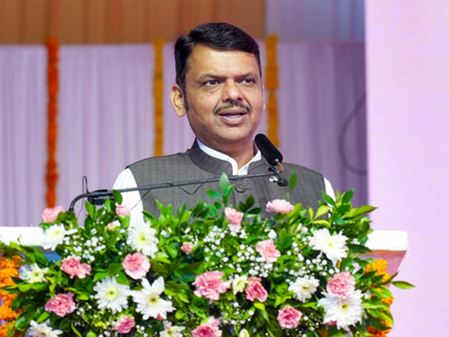
Chief Minister Devendra Fadnavis, speaking in the state legislature last week, had acknowledged that Maharashtra’s finances are under strain owing to multiple welfare schemes. However, he, along with Deputy Chief Minister and Finance Minister Ajit Pawar, maintained that the state continues to meet key indicators of economic stability and remains among the strongest state economies in the country.
“We do not have an overflowing treasury, and I will not claim that we do. But among the country’s large states, Maharashtra even today qualifies on all parameters of a stable and strong economy,” the Chief Minister said while replying to debates in the Legislative Assembly.
In March 2025, Pawar presented the state budget with a revenue deficit of Rs 45,891 crore. In June 2025, the government presented supplementary demands worth Rs 57,509.71 crore, pushing the revenue deficit beyond Rs 1 lakh crore. With further supplementary demands amounting to Rs 75,286.37 crore presented during the recently concluded winter session, the state’s revenue deficit is now approaching Rs 2 lakh crore.
The Budget Estimate for 2025-26 has already taken Maharashtra’s total debt stock to Rs 9,32,242 crore, accounting for 18.87 per cent of the Gross State Domestic Product (GSDP) — the highest level recorded in the past five years.
–IANS
sj/pgh