Radio Brisvaani

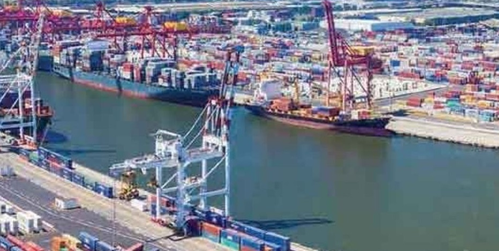
Amaravati, July 15 (IANS) The Andhra Pradesh government said on Wednesday that it has initiated a transparent bidding process for Ramayapatnam Port aimed at attracting international players and defended its decision on its operation and maintenance under the Public-Private Partnership (PPP) model.
Amid strong criticism of the coalition government by the YSR Congress Party for its decision to hand over the operation and maintenance of the port to private players, the government defended its stand.
The government, in a release, claimed that a transparent bidding process has been initiated, with clearly defined payment mechanisms for the government, including revenue share with minimum guaranteed revenue, equity share, upfront payment, and specified capacity augmentation obligations.
The state government, through the Andhra Pradesh Maritime Board (APMB), is developing Ramayapatnam port in Prakasam district as a major all-weather, multi-cargo port on a design, build, finance, operate, and transfer (DBFOT) basis.
Justifying the PPP model, the government said that implementation of the PPP model in ports for operations and maintenance is not a new subject and that all existing operating non-major ports are operating in the same model. This model has been implemented in this sector for the last 25 to 30 years across all states in India in major and non-major ports. Even the Central government is following the same method, following the PPP method in ports that are operating under the Ministry of Ports, Shipping, and Waterways, it said.
There are 119 non-major ports in India that are either operational or under development. Notably, 108 of these ports, representing nearly 91 per cent, are being developed and operated under the PPP model, it said.
Andhra Pradesh, Karnataka, Odisha, and Puducherry are among the states where all operational non-major ports are being managed under the PPP model. In Gujarat, nearly 90 per cent of non-major ports are operated through PPP arrangements.
The coalition government also stated that it expedited the construction and completed 80.50 per cent, 58.91 per cent, and 76.02 per cent of physical progress in Ramayapatnam Port, Machilipatnam Port, and Mulapeta Port and aimed to complete the construction of all ports by December 2026.
To be completed in four phases (A–D), Ramayapatnam Port will be spread across 2,538.42 acres and will have 19 berths at full build-out, including one captive BPCL liquid berth.
The APMB will hold a 12 per cent non-dilutable equity stake in Phase A and all other subsequent phases of development of all 19 berths in the project.
The capacity of Phase-A will be 34.04 million tonnes per annum while the master plan is for 138.54 million tonnes per annum. Basin Depth of Phase-A will be 16 metres CD, while the master plan is for 20.2 metres CD.
Phase A is designed to handle ships of 80,000 deadweight tonnage (DWT) while the master plan is for two lakh DWT.
According to the release, Phase A has a sanction cost of Rs 4,929.39 crore, and it has achieved 80.50 per cent physical completion. Financial progress for Phase A stands at 73.95 per cent while the remaining phases (B, C, and D) will be developed by the selected PPP Operator.
The concession period is 30 years, with an option to extend it by an additional 20 years on the concessionaire’s request/type of cargo/usage.
The port is designed as a multi-cargo port capable of handling bulk, container, liquid, and gas cargo. There are two dedicated liquid berths, and one of them has been allocated to BPCL for captive use.
Under the key project conditions, the concessionaire shall operationalise at least one fully mechanised container berth under Phase A. This must be mandatorily developed with participation from a top global container operator or should have a binding MoU with global shipping lines within 5 years from COD or phase B1 trigger.
The concessionaire is required to pay an upfront premium of Rs 1,500 crore in two stages linked to project milestones (50 per cent at the fulfilment of condition precedent and the other 50 per cent at the time of commercial operation date (COD). The bidder will quote a revenue share percentage, which will be the key bid parameter.
The revenue share payable to the authority will increase by 1 per cent every three years starting from the 20th year of COD, with a maximum cap of 25 per cent. A Minimum Guaranteed Revenue (MGR) must be paid annually, starting from Rs 10 crore and increasing to Rs 150 crore over time. This is applied in the case if the revenue share is below the specified MGR during the time period. The land lease fee is Rs 1 per acre per year, it added.
–IANS
ms/vd