Radio Brisvaani

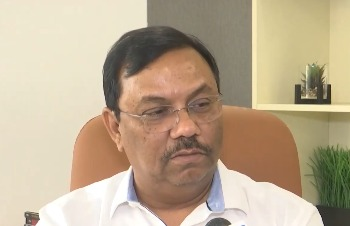
Noida, April 29 (IANS) Exit polls for the West Bengal Assembly elections point towards a possible political shift in the state, with indications of changing voter sentiment and rising expectations among the youth, according to Matrize News Communications Private Limited Director Manoj Kumar Singh.
Speaking to IANS, Singh said that West Bengal appears to be witnessing a significant political transformation.
He noted that while the Trinamool Congress (TMC) earlier relied on strong grassroots leadership to sustain its position, this time there is a growing perception that the electorate may be leaning towards the Bharatiya Janata Party (BJP).
“In the past 50 years, there has not been a double-engine government in Bengal. Its impact is visible as there has not been enough development. Among the youth, there is a sense of hope that a new government could bring positive change,” the Matrize News Director said.
Commenting on voter turnout in the Assembly elections, Singh attributed the rise in polling percentage to the impact of Special Intensive Revision (SIR) of electoral rolls.
“To explain simply, out of every 100 voters, around 14 names were removed during SIR. That leaves 86 voters, and when the same number of people vote, the percentage appears higher. So, the voting percentage has increased due to SIR,” he noted.
Singh also alleged that narratives around identity and citizenship were influencing voter behaviour.
“An atmosphere is being created by labelling people as Bangladeshis. No Bangladeshi is staying in Bengal. Many such individuals come, get IDs made, and go to different places for work, but they return during elections to vote. A fear has been spread that their citizenship may be taken away if they do not vote. This fear is mobilising voters, and there is concern that TMC is trying to take advantage of this situation,” he claimed.
Highlighting the broader development narrative, Singh said that the absence of a “double-engine government” for decades has shaped public perception.
“People believe that if the same party is in power at both the Centre and state, development will accelerate. Kolkata, once a pioneer with India’s first Metro and a historic tram system, has seen deterioration over the years,” he added.
Expanding his analysis to other states, Singh referred to Tamil Nadu, saying the DMK retained its voter base due to a fragmented Opposition.
“After J. Jayalalithaa, there was no strong leader in the AIADMK. Internal factionalism and attempts by Sasikala to form a separate outfit further divided the Opposition. The BJP also lacked a strong base there,” he said.
On the exit poll prediction in Kerala, Singh mentioned that electoral patterns and leadership dynamics played a role.
Referring to Congress leader Rahul Gandhi, he said, “At the very least, Rahul Gandhi could claim that the government would return where he is an MP. Kerala has a history of alternating governments every five years, but this time the same government continued for 10 years. The Chief Minister was 82-years-old, and there was no clear successor projected.”
Singh’s remarks come amid heightened political activity and debate over the implications of exit polls across key states, as political parties await final election results.
–IANS
sn/khz