Radio Brisvaani

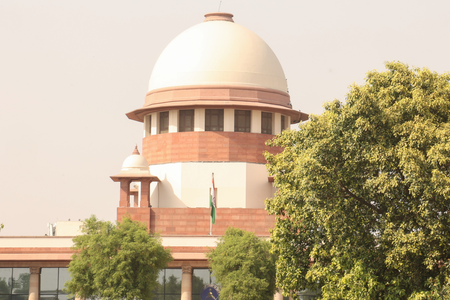
New Delhi, June 18 (IANS) The West Bengal government on Thursday moved the Supreme Court challenging the Delhi High Court’s order granting remission and directing the release of Md. Rashid Khan, a life convict in the 1993 Bowbazar bomb blast case.
The matter was mentioned before Chief Justice of India (CJI) Surya Kant, with counsel appearing for the West Bengal government seeking an urgent hearing.
After hearing the request, CJI Kant assured that the special leave petition (SLP) filed by the State of West Bengal would be considered for an early hearing.
In its petition, the West Bengal government has challenged the Delhi High Court’s direction granting remission to Rashid Khan, who was convicted under provisions of the Indian Penal Code, the Explosive Substances Act and the Terrorist and Disruptive Activities (Prevention) Act (TADA) in connection with the Bowbazar blast case.
In a judgment delivered on June 5, a single-judge Bench of Justice Neena Bansal Krishna held that Rashid Khan, who has spent more than 33 years in prison, was entitled to premature release on the basis of the reformative theory of punishment and his conduct during incarceration.
Allowing Khan’s writ petition, the Delhi High Court observed: “To keep the petitioner in jail, when he has already spent over 33 years in prison, may not be fruitful in any manner.”
It further said that his jail record and reports “clearly indicate a reformed person, entitled to a reformative approach”.
The judgment recorded that Khan’s conduct in prison was recorded as “very very good”, that he had returned to custody on time after being released on parole on multiple occasions, and that there was a “very low likelihood of the recurrence of offence” considering his advanced age and medical condition.
Referring to the reformative approach adopted in Indian criminal jurisprudence, the Delhi High Court said: “If the gravity of the offence was an important criterion for considering the remission policy, then it would have been so stated as a ground in the scheme of remission.”
It also took note of the fact that co-convict Pannalal Jaysoara had earlier been granted remission and observed that while parity cannot be claimed as a matter of right, the gravity of the offence alone could not be used to deny remission if other criteria were satisfied.
Khan was convicted in the 1993 Bowbazar blast case and has been in custody since March 1993.
The State Sentence Review Board had initially recommended his premature release in March 2015, but the proposal was subsequently withdrawn amid legal uncertainties regarding remission powers in TADA cases.
The West Bengal government had opposed his release, contending that Khan was the mastermind of the blast, that the offence had a deep societal impact, and that police authorities had objected to his premature release.
However, the Delhi High Court concluded that after more than three decades of incarceration, the objectives of punishment had been sufficiently served and directed that Khan be released forthwith if not required in any other case.
–IANS
pds/dpb