Radio Brisvaani

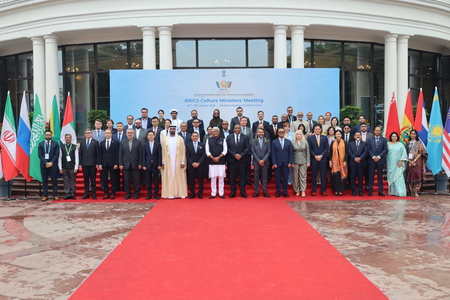
Bhopal, Aug 8 (IANS) The four‑day BRICS Cultural Conference‑2026 concluded in Bhopal on Saturday with the adoption of the ‘Bhopal Declaration’ in the presence of culture ministers from participating nations.
The declaration outlines decisions to expand opportunities for artists across member and partner countries and to facilitate the repatriation of cultural assets taken abroad through theft or illicit means.
Speaking to media persons, Union Minister Gajendra Singh Shekhawat said the three days of deliberations culminated in the Bhopal Declaration. He noted that the 11th meeting of BRICS nations on culture brought together 55 delegates from 14 countries under the theme ‘Resilience, Innovation, and Sustainability.’
For the first time, time‑bound targets were set, and a shared roadmap on culture and heritage was formulated. The declaration incorporates a digital component and specific initiatives for the return of cultural property.
Guided by India’s overarching BRICS theme of “Building for Resilience, Innovation, Cooperation, and Sustainability,” the Culture Track focused on practical initiatives, institutional cooperation and sustained collaboration. The Bhopal Declaration aims to strengthen the institutional framework for BRICS cultural cooperation.
It prioritises cooperation in the cultural and creative industries and the creative economy through exchange of methodologies, support for creators, networking and expanded market access via digital tools.
The document enhances collaboration on UNESCO’s multinational nomination processes for shared cultural heritage. It identifies provenance research, restitution and repatriation of cultural property as priority areas, including the exploration of Artificial Intelligence‑based tracing tools.
Preservation of traditional knowledge systems and traditional cultural expressions forms another key pillar. Cooperation among museums, libraries and archives in documentary heritage, digitisation and preservation is promoted to enable institutional exchange and expertise sharing.
The declaration also addresses creators’ rights, emphasising transparency and fair remuneration for the use of copyright‑protected works in Artificial Intelligence systems.
As a concrete initiative, India announced a pilot “Voluntary Artist Registry” to facilitate cultural exchange, strengthen professional networks and create opportunities for artists and creative professionals across BRICS nations. The registry will help connect talent and support people‑to‑people ties.
The Culture Track also featured bilateral meetings at the ministerial and secretary levels, allowing countries to advance specific areas of mutual interest alongside the multilateral agenda.
The process leading to the ministerial meeting included three Culture Working Group sessions: a virtual meeting on April 29–30, a meeting in Varanasi on June 4–5, and the third in Bhopal on August 5–6.
Participating BRICS members were Brazil, China, Egypt (online), Ethiopia, India, Indonesia, Iran, Russia, South Africa and the United Arab Emirates. Partner countries included Belarus, Cuba, Kazakhstan and Thailand. Culture ministers from Indonesia, South Africa and the UAE attended in person.
Under India’s presidency, the conference provided a practical framework to deepen cultural cooperation among BRICS nations and partners.
–IANS
sktr/dan