Radio Brisvaani

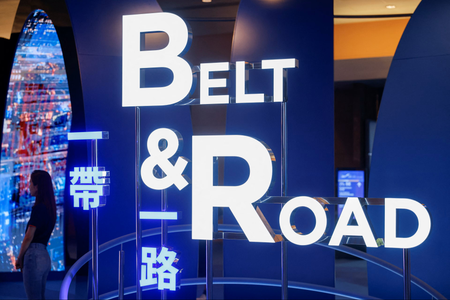
New Delhi, June 5 (IANS) China strategy of taking up economic projects such as the Belt and Road Initiative (BRI) in developing countries with the objective of extending its geopolitical clout across regions appears to have run into a hurdle when it comes to spreading its influence to Latin America, according to an article in The Diplomat.
China’s strategy has shaped its global expansion from Africa and Southeast Asia to the Pacific Islands and Latin America. It has also helped explain why Beijing has devoted enormous resources to expanding its economic footprint throughout the developing world through initiatives such as the Belt and Road Initiative launched in 2013 to connect Asia, Africa, and Europe through a vast network of ports, railways, highways, and trade corridors, the article points out.
However, it highlights that “recent developments in Latin America are calling this perceived wisdom into question.”
If economic engagement is measured through trade volumes, investment flows, and commercial activity, Beijing’s position in Latin America remains strong.
The more relevant question is whether China’s economic success has generated the level of geopolitical influence many policymakers expected it would. After more than two decades of engagement, Latin America offers an opportunity to evaluate the strategic return on China, says the report.
The article states that while China’s strategy has had geopolitical impacts along with the economic expansion as in the last nine years, five Latin American countries switched diplomatic recognition from Taiwan to China: Panama, the Dominican Republic, El Salvador, Nicaragua, and Honduras.
The BRI expanded into the Western Hemisphere, and Chinese influence became a permanent feature of discussions about Latin Americas geopolitical future.
“Yet recent developments suggest that the geopolitical returns may be less obvious than many observers once assumed. Panama illustrates the challenge facing China,” the article observes.
Given the strategic importance of the Panama Canal, many observers interpreted Panama’s 2017 decision to establish diplomatic relations with China as one of Beijing’s most significant diplomatic victories in the Western Hemisphere after which Panama become the first Latin American country to the BRI.
The move was widely viewed as evidence that China’s influence was steadily expanding within a region historically dominated by the United States, the article points out.
China’s economic presence in Panama remains substantial — trade and commercial relationships continue — but one of Beijing’s most visible diplomatic achievements proved less durable than many expected, the article observes.
Similarly, for years, Beijing invested heavily in its relationship with Venezuela and became one of the country’s most important external economic partners. The partnership appeared to demonstrate how economic and political interests could reinforce one another over time.
However, Beijing now faces a dramatically different environment. The taking over of the helm by former Vice President Delcy Rodriguez following the capture of President Nicolas Maduro by US forces has ushered in a new phase of engagement between Caracas and Washington.
Efforts by the Donald Trump administration to restore American commercial activity in Venezuela, particularly in the oil sector have created a strategic landscape very different from the one China spent years cultivating.
“China’s investments, trade, and financial interests in Venezuela remain. What appears less certain is the political environment through which those interests will operate and the level of influence Beijing can continue to exercise,” the article observes.
–IANS
sps/na