Radio Brisvaani

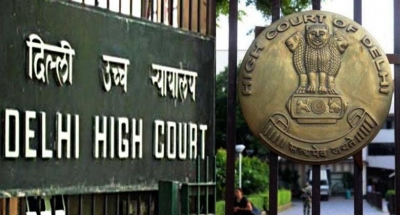
New Delhi, July 14 (IANS) The Delhi High Court has refused to allow a Chinese national and Vivo executive facing prosecution in a money laundering case to travel home to visit his critically ill father, holding that humanitarian considerations alone could not outweigh the need to secure his presence during trial, particularly in the absence of an extradition treaty or Mutual Legal Assistance Treaty (MLAT) between India and China.
A single-judge bench of Justice Madhu Jain dismissed the application filed by Guangwen Kuang @ Andrew, who had sought release of his passport and permission to travel to China’s Guangzhou for a temporary period to visit his 82-year-old father, who is stated to be on life support after suffering a right cerebellar haemorrhage.
“This Court is conscious of the humanitarian circumstances projected by the applicant regarding the medical condition of his father. However, while considering an application seeking permission to travel abroad during the pendency of criminal proceedings, humanitarian considerations alone cannot be determinative,” it said.
It added that the court was required “to balance such considerations with the interest of justice and the necessity of securing the presence of the accused throughout the proceedings”.
In its order, the Delhi High Court recorded that the applicant, a Chinese national, is facing prosecution under the Prevention of Money Laundering Act (PMLA) in a case involving alleged proceeds of crime amounting to approximately Rs 2,02,41,17,72,292.89, describing the allegations as relating to “a serious economic offence of an exceptionally high magnitude”.
Justice Jain accepted the Enforcement Directorate’s contention that there was no extradition treaty between India and China, observing that “the apprehension expressed by the prosecution that the applicant may not return to India cannot be brushed aside as merely speculative”.
“If the applicant fails to return, the possibility of securing his presence before the learned Trial Court would become highly uncertain,” the order said.
The Delhi High Court further observed that India and China also do not have a Mutual Legal Assistance Treaty in criminal matters, making it impossible to verify the authenticity of the medical documents relating to the applicant’s father’s condition within a reasonable time.
“In the absence of such a mechanism, the only course available would be by way of issuance of Letters Rogatory or a judicial request through diplomatic channels. Such a process is time-consuming and may take several months, and in some cases approximately a year, before any response is received,” it observed.
The order also relied on a 2024 Karnataka High Court judgment, which had taken note of Chinese law restricting foreign nationals facing criminal proceedings from leaving the country, and held that the principle assumed significance in the present case as well.
“It would not be adopting a substantially liberal approach in favour of a foreign national facing prosecution before an Indian Court, particularly when no effective legal mechanism exists to secure his return in the event of non-compliance,” the Delhi High Court said.
Rejecting the applicant’s reliance on the Supreme Court’s decision in Wu Chuaannan & Ors. v. State of Chhattisgarh, Justice Jain held that the facts were distinguishable since that case involved several safeguards, including previous compliance with travel permissions, a bank guarantee of Rs 1 crore, an undertaking by a government-owned Chinese employer, and an assurance from the Chinese Consulate General.
In the present case, the Delhi High Court said that the undertaking furnished by the applicant’s private employer “neither emanates from any governmental authority nor creates any legally enforceable obligation capable of securing the applicant’s return to India”.
“Having regard to the seriousness of the allegations, the enormous magnitude of the alleged proceeds of crime, the applicant’s status as a foreign national, the absence of any extradition treaty or Mutual Legal Assistance Treaty in criminal matters between India and the People’s Republic of China, this Court is of the considered opinion that no case for grant of permission to travel to Guangzhou, China is made out,” the Delhi High Court held while dismissing the application.
–IANS
pds/vd