Radio Brisvaani

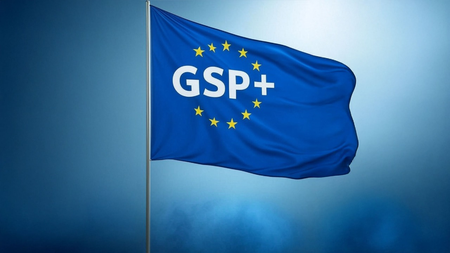
New Delhi, Sep 17 (IANS) The GSP+, or Generalised System of Preferences, of the European Union was designed as a means of linking trade preferences to specific commitments in the areas of human rights, labour rights, environmental protection, and good governance. However, Pakistan, while reaping rich economic gains from the system, has exploited to persecute minority communities and suppress human rights.
“The GSP+ regime, a European Union tool, created to promote human rights through trade, has been hijacked in Pakistan to cover up and tolerate abuses. Instead of strengthening religious freedom and democracy, it accompanies surveillance, silencing, and persecution of minorities. The irony is that a policy designed to serve human dignity is in practice acting as a silent accomplice to oppression,” according to an article by Staikou Dimitra in Eurasia Review.
The article calls for EU leaders to take a fresh look at the GSP+ status of Pakistan as the country has violated all the principles embodied in the system. “EU leaders can either choose to take a stand for the principles they swore to protect, or risk being accomplices to a tragedy unfolding in Pakistan,” the article observes.
Despite the trade privileges hat Pakistan enjoys from its access to the European market, the government continues to allow attacks on religious communities such as the Ahmadiyya and Christians, and restrict freedom of expression through digital surveillance. Rather than translating into institutional progress, economic cooperation often serves as a safety net for the regime, the article states.
Enforced disappearances, sometimes by state backed militias and in some cases by the state agencies themselves have left scars on vulnerable communities in Pakistan. This practice, which began during Pervez Musharraf’s military dictatorship, continues with the involvement of the military and intelligence services.
More than 5,000 people have disappeared, according to humanitarian organisations. In addition, approximately 80 civilians were convicted by military courts for participating in riots in 2023, which is considered incompatible with Pakistan’s international obligations. The trial of civilians by Military Courts was condemned by the EU at multiple times in the last one year, a cause big enough for the EU to seriously reconsider the GSP+ status for Pakistan, the article points out.
Pakistan’s violation of basic human rights, which GSP+ is designed to promote, is not limited to enforced disappearances and military trials. It extends to the technical domain as well.
According to a report by Amnesty International, Pakistan has developed one of the most advanced surveillance systems in the world, using technology from China and the West. The findings of its report are based on a 2024 case in the Islamabad High Court, filed by Bushra Bibi, wife of former Prime Minister Imran Khan, after her private phone calls were leaked online.
In court, Pakistan’s defence ministries and intelligence agencies denied that they conduct or have the capacity to conduct telephone tapping. However, during questioning, the telecommunications regulatory authority acknowledged that it had already ordered telephone companies to install LIMS for use by “designated services.” This system allows intelligence services to monitor at least 4 million mobile phones simultaneously and block 2 million internet sessions, the article observes.
It highlights that the conflict-ridden province of Balochistan in particular faces frequent internet outages and restrictions on freedom of speech. In a recent report, Paank, the human rights department of the Balochistan National Movement (BNM), in a recent report, strongly called on the European Union to review Pakistan’s GSP+ status, stressing that it is unacceptable for Pakistan to enjoy economic advantages while committing severe oppression.
The report strongly condemned the Anti-Terrorism Balochistan Amendment Bill 2025, which grants unchecked powers to the military, police, and intelligence agencies to arrest anyone on mere suspicion for up to three months, with the possibility of extension. The report noted that several Baloch leaders, such as Mahrang Baloch, Gulzadi Baloch, Beebow Baloch, Sibghat Ullah Baloch, and Beeberg Baloch, remain in prison even after appearing in court.
Amnesty said it also examined licensing agreements, commercial data, leaked technical files, and Chinese records linking the firewall supplier to state-owned companies in Beijing. It added that the firewall is provided by Chinese company Geedge Networks.
The implementation of advanced monitoring systems (LIMS, WMS 2.0) with Chinese and Western equipment creates a climate of fear, prevents freedom of expression, and reinforces the repression of opponents. GSP+ does not exercise control over these practices, thus acting as an economic and political safety net for the regime.
Amnesty said the firewall uses equipment from the American company Niagara Networks, software from Thales DIS, a subsidiary of the French company Thales, and servers from a Chinese state-owned IT company. An earlier version was based on Canadian Sandvine.
Pakistan’s secret services can monitor at least 4 million mobile phones simultaneously through the Lawful Interception Management System (LIMS), while a firewall known as WMS 2.0, which controls internet traffic, can block 2 million active connections simultaneously, according to Amnesty. Pakistan currently blocks approximately 650,000 web links and restricts platforms such as YouTube, Facebook, and X, according to Amnesty.
–IANS
sps/na