Radio Brisvaani

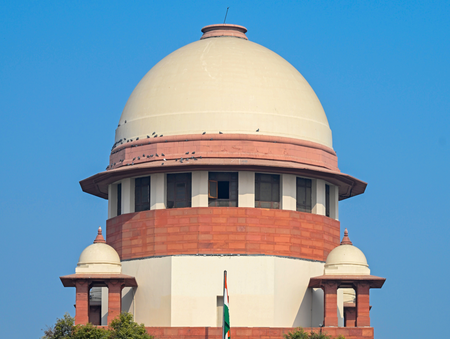
New Delhi, June 2 (IANS) The Supreme Court said on Tuesday that a married daughter cannot be denied appointment as a fair price shop dealer on compassionate grounds solely because of her marital status, holding that such exclusion is based on unconstitutional gender stereotypes and violates the guarantees of equality and non-discrimination.
A Bench of Justices PS Narasimha and Alok Aradhe allowed an appeal filed by Kulsum Nisha, setting aside orders of the Allahabad High Court, Deputy Commissioner and Sub-Divisional Magistrate (SDM) which had rejected her claim solely on the ground that she was a married daughter.
The appellant had sought allotment of a fair price shop following the death of her mother, who was a dealer in Uttar Pradesh’s Amethi district.
Her application was rejected under a government order that excluded married daughters from the definition of “family”.
Examining the Constitutional validity of excluding married daughters from the definition of family, the top court said that the object of allotment under the dependent quota is to provide immediate relief to the family of a deceased dealer facing financial hardship.
“The relevant considerations are dependency, financial need, residence, and the ability of the applicant to discharge the obligations attached to the dealership. Marital status bears no rational nexus to any of these considerations,” the Justice Narasimha-led bench said.
Coming down on the exclusion, the Supreme Court said it was based on a constitutionally impermissible assumption that a daughter ceases to be part of her parental family after marriage.
“Marriage neither extinguishes the bond between a daughter and her parental family nor furnishes a valid basis to presume absence of dependency,” the court judgment said.
It added that dependency is a question of fact and “cannot be conclusively determined by reference to marital status alone”.
Noting that the scheme did not exclude married sons from consideration, the Justice Narasimha-led bench said: “A son continues to remain within the fold of the family irrespective of his marital status, whereas a daughter is excluded solely because she is married.”
The apex court held that the distinction is founded on a gender-based stereotype that a daughter, upon marriage, becomes a member of another family and loses all ties with her natal family.
“Such a presumption is incompatible with the constitutional guarantee of equality and perpetuates historical notions of gender inequality which the Constitution seeks to eradicate,” it said.
Rejecting the Uttar Pradesh government’s contention that a married daughter may not satisfy the requirement of local residence, the Supreme Court said residence is an independent eligibility criterion that must be assessed on the facts of each case.
“A blanket exclusion of all married daughters cannot be justified on the speculative assumption that every married daughter necessarily resides elsewhere,” the judgment said.
Holding that the exclusion of married daughters from the definition of family fails the test of reasonable classification and is manifestly arbitrary, the top court said that it violates Articles 14 and 15(1) of the Constitution.
“The exclusion is founded solely upon marital status and gender stereotypes and consequently, violates Articles 14 and 15(1) of the Constitution of India,” the Justice Narasimha-led bench said.
Applying the doctrine of purposive construction, the Supreme Court held that the expression “daughters” in the relevant provisions must be read to include married daughters, provided they establish dependency on the deceased dealer and satisfy other eligibility conditions, including local residence.
It also approved the view taken by several High Courts, including the Allahabad, Bombay, Karnataka and Calcutta High Courts, and overruled contrary decisions that had denied such benefits to married daughters.
Applying the court order to the facts of the case, the Justice Narasimha-led bench found that the appellant continued to reside in the same village even after marriage, actively assisted her mother in running the fair price shop, and had assumed responsibility for maintaining her sisters, including a visually impaired sister, after her mother’s death.
“The sole ground on which her application was rejected was that she is a married daughter. Once that ground is held to be constitutionally invalid, no impediment survives to the grant of relief,” it held.
Since her claim was rejected solely on the ground that she was a married daughter, the Supreme Court quashed the orders of the Allahabad High Court, Deputy Commissioner and SDM, and directed issuance of the allotment order in her favour within four weeks.
–IANS
pds/khz