Radio Brisvaani

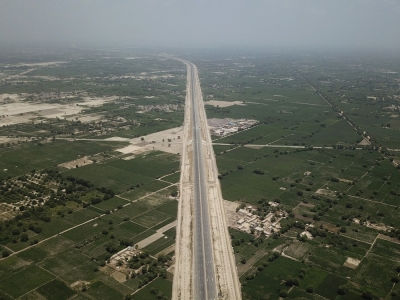
New Delhi, June 27 (IANS) The proposed China–Myanmar–Bangladesh Economic Corridor (CMBEC) is another attempt at Beijing trying to reshape South Asia’s connectivity trying to strengthen its Belt and Road footprint and direct access to the Indian Ocean.
Additionally, alongside Gwadar Port in Pakistan and Hambantota Port in Sri Lanka, Chinese presence in Bangladesh’s Mongla and Chittagong Ports is an effort at furthering Beijing’s “string of pearls” strategy, surrounding India’s maritime sphere.
The port modernisation projects will directly impact the Rohingya community living in Chittagong camps who stand to face displacement as land is repurposed for industrial and port expansion.
This will finally result in pushing them toward India’s eastern and northeastern parts on the one side, and into Southeast Asia, on the other.
Beijing frames these projects as economic, and avoids direct involvement in the Rohingya issue — potentially leaving these unresolved and worsening instability.
China’s record in dealing with the Turkic-speaking Muslim Uyghur minority, as mentioned in various reports, highlight their conditions in the Xinjiang Province.
Washington enacted the Uyghur Forced Labour Prevention Act (UFLPA) in December 2021, preventing goods made with “forced labour” connected to the Xinjiang Uyghur Autonomous Region (XUAR) from entering the United States.
In Bangladesh, refugee camps at the Chittagong region, particularly Cox’s Bazar, reportedly host hundreds of thousands of Rohingyas, mainly from Myanmar’s Rakhine State, who are fleeing military crackdowns since 2017.
India already faces severe challenges in managing an influx amidst rising security concerns.
Increased traffic will further strain border management, heighten communal tensions, and complicate humanitarian responses.
The CMBEC is slated to start from Kunming, capital of China’s Yunnan province, and reach Mandalay in Myanmar.
From there, according to earlier reports, one part was to be extended to Yangon and another to the Kyaukphyu deep sea port in Rakhine State.
Following the recent visit of Bangladesh Prime Minister Tarique Rahman, China has reportedly proposed to connect Myanmar’s Rakhine State to the Chittagong and Cox’s Bazar regions through road and railway networks.
A similar China–Pakistan Economic Corridor (CPEC) was launched in 2015, involving a network of highways, railways, pipelines, and energy projects stretching from Xinjiang region to the Gwadar Port on the Arabian Sea.
The corridor gave China direct access to the Arabian Sea, and Indian Ocean.
For Pakistan, in an economic crisis, CPEC promised infrastructure development and economic growth.
Concerns have surfaced since then on transparency, environmental impact, and the sustainability of debt incurred to finance these projects.
Apart from Pakistan, China has been investing heavily in infrastructure projects across South Asia, often through loans and financing arrangements.
While these projects offer development opportunities, they have also led to mounting debt burdens.
Several reports suggest such investments leading to risks creating a “debt trap”, where countries lose economic sovereignty and strategic assets due to unsustainable borrowing, while China gains geopolitical leverage in the region.
Sri Lanka’s Hambantota Port is a notable example, where inability to repay loans forced the government to lease the port to China for 99 years.
Similarly, Pakistan’s reliance on Chinese loans for CPEC projects has raised fears of long-term financial dependency. It is all part of Beijing’s aim to counter New Delhi’s influence in South Asia through a multi-layered strategy; and creating a debt trap for nations.
It generally supports regimes in unstable environments, like Pakistan, Afghanistan, post-coup Myanmar, among others, to secure borders and investments while limiting India’s influence.
India “Neighbourhood First”, meanwhile, is a foreign policy doctrine that prioritises strong, cooperative relations with its immediate neighbours through aid, connectivity, trade, and cultural ties.
Answering a question in Lok Sabha in March, Minister of State for External Affairs Pabitra Margherita asserted that India’s relationship with Bangladesh is independent of its relationship with third countries.
New Delhi also continues to monitor developments having a bearing on India’s national interests and take all necessary measures to safeguard them, he added.
Meanwhile, India remains an important partner for Myanmar in areas such as development assistance, humanitarian support, healthcare, pharmaceuticals, education, capacity building and infrastructure development.
As per an official note, India’s timely assistance during natural disasters, including humanitarian relief and reconstruction efforts, as well as its role as a trusted development partner, has created an immense goodwill among the people of Myanmar.
President U. Min Aung Hlaing of Myanmar was in India on his first official visit between May 30 to June 3 this year where he met Prime Minister Narendra Modi and others.
Talks included bilateral, regional and global issues of mutual interest and the way forward for the relationship.
–IANS
jb/khz