Radio Brisvaani

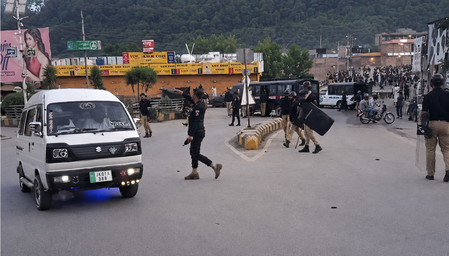
New Delhi, June 14 (IANS) There is no exact count of how many people have been killed in Pakistan Occupied Kashmir (PoK), and perhaps there never will be. The Pakistani establishment has long been accused of concealing uncomfortable truths and controlling the flow of information from the region.
What is unfolding in PoK is shocking, though not entirely surprising. It is inhuman, certainly, but allegations of repression and heavy-handed action by Pakistani authorities in the territory are not new.
The only reality becoming increasingly difficult to ignore is that Pakistan’s professed concern for Kashmiris stands in stark contrast to the treatment many in PoK say they receive. The often-repeated claim that Kashmir is Pakistan’s “jugular vein” appears increasingly hollow to those experiencing the consequences on the ground.
The use of force against civilians is not an unfamiliar story in PoK. Similar incidents in the past have often passed with little international attention. This time, however, the reaction appears to be different.
For decades, groups backed by the Pakistani establishment organised protests outside Indian embassies and missions, held conferences and campaigned internationally against New Delhi. Such activities had become a familiar feature of Pakistan’s Kashmir narrative.
But truth has a way of eventually surfacing. Today, attention is shifting towards the people of PoK themselves and the grievances they are expressing. The deaths reported during recent protests have brought renewed scrutiny to the region and to Pakistan’s handling of dissent.
The crackdown on demonstrators in PoK has triggered protests among sections of the Kashmiri diaspora in the United Kingdom, the United States, and parts of Western Europe. Protesters have accused Pakistani authorities of using excessive force, carrying out arbitrary arrests and imposing communication and connectivity restrictions. The protesters have staged demonstrations outside Pakistani diplomatic missions and called for greater international scrutiny.
In the United Kingdom, demonstrations were reported outside the Pakistani High Commission in London, the Pakistani Consulate in Bradford, and in Birmingham and Manchester. Protesters accused Islamabad of suppressing dissent and called on international organisations to take note of the situation. More than 50 British lawmakers reportedly wrote to Home Secretary Yvette Cooper, urging the UK government to examine reports of communication restrictions and the security crackdown in Pakistan Occupied Kashmir.
Social media platforms have been flooded with images and videos purportedly showing the unrest in PoK. Protesters claim that security forces used excessive force against largely unarmed demonstrators. The images emerging from the region have painted a grim picture, with families searching for missing relatives and communities grappling with the aftermath of violence.
The Joint Awami Action Committee (JAAC), an umbrella organisation comprising civil society activists, traders, students, lawyers and socio-religious groups in PoK, was recently banned under Pakistan’s anti-terror laws. The organisation had called for a march to Muzaffarabad against the reservation of 12 seats for refugees in the forthcoming PoK Assembly elections.
The JAAC, over time, has emerged as one of the most influential grassroots movements in PoK. Initially mobilised around issues such as rising electricity tariffs, inflation, and governance failures, it has gradually evolved into a platform through which residents could voice broader political and economic concerns.
The Pakistani government’s violent response is an attempt to suppress popular dissent. Significantly, many of those who have traditionally focused attention on developments in Jammu and Kashmir are now being compelled to confront questions about the situation in PoK.
The violence in PoK should also prompt reflection among those in Kashmir who continue to view Pakistan sympathetically. But the response from the Valley has been relatively muted.
While some leaders have expressed concern, there has been no widespread public mobilisation against the Pakistani establishment. National Conference President Farooq Abdullah called for international attention and urged the United Nations to examine the situation. Kashmir’s chief cleric, Mirwaiz Umar Farooq, appealed for engagement and a peaceful resolution. Beyond such statements, however, public reaction has remained limited.
Across the Line of Control, the situation remains tense. Many residents say they are being denied basic rights and are facing repression for demanding greater political and economic freedoms. Calls for “azadi” that once echoed in parts of Jammu and Kashmir are now being heard from sections of PoK, where anti-Pakistan sentiment appears to be growing.
This is the same territory that continues to host terrorist infrastructure supported by elements within the Pakistani establishment. PoK today presents a troubling picture: a region where some residents allege discrimination and political marginalisation, while militant networks continue to find space to operate.
What is happening in PoK today should make those advocating talks with Pakistan pause and reflect. It is a reminder to those who continue to harbour illusions about Pakistan’s commitment to the welfare of Kashmiris.
The developments in the region are not merely a local disturbance; they are a challenge to a narrative that Islamabad has spent decades promoting before the world.
(Deepika Bhan can be contacted at deepika.b@ians.in)
–IANS
dpb/khz