Radio Brisvaani

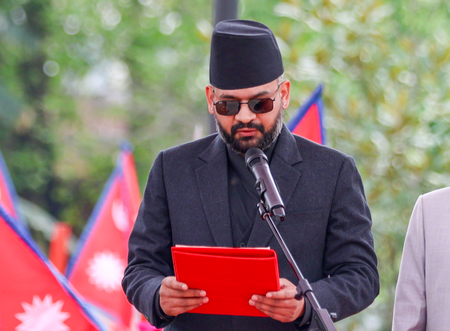
New Delhi, May 28 (IANS) In the run-up to Nepal’s March 5 election, the Rastriya Swatantra Party’s (RSP) then projected Prime Ministerial face Balendra Shah remained largely elusive for most of his followers even in his own constituency of Jhapa-5. Even after he took over the post, the situation hasn’t changed.
A large number of his admirers had then congregated in Jhapa, voluntarily working for the victory of this engineer-turned-rapper and social media sensation.
Shah’s itinerary mostly remained unknown, at times till he actually hit the road, driving an SUV himself. His public interaction remained largely confined to zipping through roads, posing for “selfies”, or making the love sign, and the occasional taking off his dark glasses or a smattering of words.
Such is his appeal that he was elected Mayor of Kathmandu as the first independent candidate. He chose to resign and contest on the RSP’s invitation against former Prime Minister K.P. Sharma Oli in the latter’s bastion of Jhapa-5 seat and won convincingly.
Many claim him to be a private person, often reclusive.
On one occasion, during his campaign, a car with media persons overtook his vehicle for a clear shot of his driving. Shah abruptly stopped his vehicle and sent a representative to the journalists to ask them to refrain from such activities.
This week, Nepal’s lawmakers were reportedly raising concerns that the Prime Minister – better known as Balen – has not publicly addressed the Parliament since assuming office in late March 2026 during the Ram Navami festival.
According to media reports, his continued absence has sparked political debates, Opposition protests, and growing accusations that the country’s newest leader is evading democratic accountability.
However, he is said to have been visiting the Office of the Prime Minister and Council of Ministers in Singha Durbar, Kathmandu. He has made it clear he will not appear “immediately”, said media reports.
When House Speaker Dol Prasad Aryal met him last week to request his presence in the Parliament, Shah reportedly responded that he would come at an “appropriate time”.
Reports also claimed that he earlier declined to meet India’s Foreign Secretary Vikram Misri and United States special envoy Sergio Gor on separate occasions, intensifying debates.
Since assuming office nearly two months ago, Shah has yet to address the House publicly. He had apparently walked out midway through President Ram Chandra Poudel’s presentation of the government’s policy and programme earlier this week, triggering immediate backlash.
Opposition leaders argue that a Prime Minister who refuses to face the Parliament is flouting basic democratic norms. The Opposition has urged Speaker Aryal to direct the Prime Minister and his ministers to attend Parliament regularly. They point out that parliamentary practice requires question-and-answer sessions with lawmakers during the first week of every month – a tradition Shah allegedly is now breaking.
Amidst the standoff, government allies have defended Shah’s absence by citing parliamentary rules that allow ministers to respond on behalf of the head of government. They accuse the Opposition of trying to “corner the government before it settles into office”.
Critics claim that Balen entered office promising transparency and direct engagement, yet he has not once addressed the house. He entered politics with a vision to challenge the old political culture, but current events are contradictory, they claim.
The Opposition will look for issues to take him on, but as long as the new Prime Minister delivers on promises, he will retain the “hero” image. Whether he will finally show up, that an “appropriate time” will tell.
–IANS
jb/vd