• About Us
  • Our Editorial Policy
  • Business Directory
  • Advertise with Us
  • Our Advertisers
  • Contact Us
Australia India News
India News Australia
  • Home
  • Current Issue
    Past Issue
  • India News
  • Politics
  • Business
  • World
    World This Week
  • Community News
  • What's On
  • Others
    Yoga in Australia News COVID-19 Community News Naari IPL News Health Travel Entertainment
  • Migrants Expo
  • National Events
  • Please wait..
India News News

Fuel excise duty cut results in Rs 30,000 crore cost for central exchequer, no burden on consumers

  • BY India News Newsdesk
  • May 23, 2026
  • 0 COMMENTS

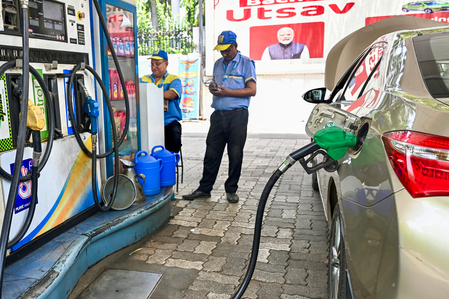
New Delhi, May 23 (IANS) The special additional excise duty (SAED) cut on petrol and diesel on March 27, 2026 resulted in approximately Rs 30,000 crore cost for the central exchequer in the current fiscal year, and the pass-through of higher crude was not made to the consumer; it was absorbed by the exchequer.

Amid the Strait of Hormuz disruption, the SAED cut reduced petrol excise to three rupees a litre and took diesel excise to zero.

The Congress argues that petrol cost roughly Rs 71 a litre in May 2014 and costs roughly Rs 98 a litre today and presents the difference as evidence of overtaxation.

According to sources, the argument depends entirely on what one thinks the May 2014 number actually represented. It was not the cost of supplying a litre of petrol. It was the price that resulted after the UPA had issued approximately Rs 1.34 lakh crore in oil bonds to public sector oil marketing companies in lieu of price pass-through, between 2005 and 2010.

The 2014 price was a deferred tax invoice on the next generation of consumers. The Prime Minister Narendra Modi government has been redeeming those bonds: roughly Rs 10,000 crore in FY 2021–22, Rs 31,150 crore in FY 2023–24, Rs 52,860 crore in FY 2024–25, and Rs 36,913 crore in FY 2025–26, alongside cumulative interest running into the tens of thousands of crores.

The price which the Congress nostalgically quotes was being paid by the present government, on behalf of the previous one, until very recently.

The mechanism the present government has used to absorb a price shock is different in kind, according to sources.

When crude rose in 2022 and again in 2026, the central excise duty on petrol and diesel was cut.

The reduction was direct, transparent, on-budget, and visible at the pump within a day. The exchequer accepted the loss of revenue. No bond was issued; no obligation was deferred; no future taxpayer was committed to repaying anything, said sources.

–IANS

na/

Post navigation

Jamiat Ulama-i-Hind issues guidelines for Bakrid; urges people to follow law, maintain cleanliness
‘Finishing games consistently is a rare skill’: Mukul Choudhary reveals Virat Kohli’s advice after KKR heroics

Related Post

Chennithala launches ‘Operation Toofan’ to crack down on Kerala drug mafia
May 23, 2026
Around 80 pc occupancy recorded at shelter homes in Ahmedabad amid rising temperatures
May 23, 2026
Coimbatore girl’s murder shocks TN; CM Vijay promises swift justice as two accused arrested
May 23, 2026
Scindia meets MP BJP president Khandelwal, reviews development, party work
May 23, 2026

Our Current Issue

Australia IA – May 16-31, 2026

Alluring India 2026

Alluring India 2026

Our Advertisers

  • Battery Rebate australia
  • Bess Australia Solar Panels

Follow Us

  • facebook
  • facebook
  • facebook
  • facebook
INDIA NEWS on YouTube in Australia, bring to our readers and subscribers national and international news, editorials, expert columns, community activities and interviews of political leaders, celebrities, business professionals, academics and sport personalities among others.
  • facebook
  • facebook
  • facebook
  • facebook

Category

  • Accident
  • Adani Australia
  • Advertorial
  • Arts & Culture
  • Ashes 2022
  • Australia

Recent News

  • Pakistan lacks deep ‘structural reforms’, stares at...
  • India’s equity inflows rebound in April as...

Subscribe Newsletter

Get the latest creative news from india news

  • Privacy Policy
  • Disclaimer