Radio Brisvaani

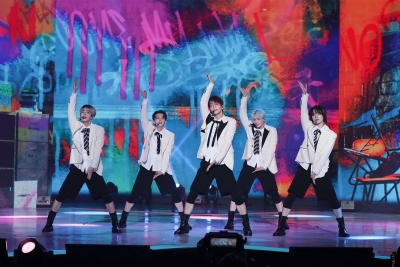
New Delhi: Recent incidents and growing concerns around excessive online influence and cultural obsession among adolescents have renewed national debate on how foreign cultural content is being consumed by young Indians, and whether adequate guidance and balance are being provided at the family and institutional level.
At the heart of this discussion lies a broader and more complex issue — India’s cultural confidence and the way its youth relate to their own language, traditions, and identity in an increasingly globalised world.
Over the past decade, South Korean popular culture — popularly known as the Korean Wave or Hallyu — has gained remarkable traction among Indian youth.
Korean pop music, television dramas, online games, fashion trends, food preferences, and even language expressions have become deeply embedded in adolescent and youth lifestyles, particularly in urban and semi-urban India.
While cultural exchange is a natural and often enriching process, concern arises when admiration for another culture begins to replace, rather than complement, one’s own cultural foundations.
The contrast between South Korea and India is particularly striking.
While a country like South Korea, with a population of around 50 million, is consistently promoting its culture, language, traditions, and music not only within its own borders but across the world, India — despite having a population of nearly 1.4 billion — appears to be gradually distancing itself from its own cultural roots.
Many observers note that Indian youth are increasingly forgetting their language, traditions, food habits, and cultural practices, while enthusiastically adopting foreign lifestyles and trends.
South Korea’s cultural success is not driven by blind admiration for other nations, nor by rejection of globalisation. Instead, it is built on deep confidence in its own identity.
Korean youth do not abandon their language or traditions while engaging with the global community.
On international platforms, Koreans confidently use their native language, promote their music and cinema, support domestic brands, and project a strong sense of national belonging. This mindset is anchored in the concept of “Woori Nara”, meaning “my country”, which reflects collective responsibility, cultural loyalty, and pride.
Wherever Koreans go — whether for education, employment, or travel — they consciously carry their identity with them. They speak Korean among themselves abroad, prefer Korean airlines, support Korean-made products, and actively promote Korean food, games, music, dramas, and technology.
Importantly, Korean youth are not seen abandoning their cultural values in the name of global trends, nor do they display excessive fascination with foreign cultures at the cost of their own traditions.
In contrast, a section of Indian youth appears to be moving in the opposite direction. Increasingly, young Indians openly express discomfort or dislike toward Indian food, show hesitation in using Indian languages in public spaces, and associate modernity, sophistication, or global status primarily with foreign cultural markers. While interest in global cultures is not problematic in itself, concern arises when such interest is accompanied by embarrassment, detachment, or disregard for one’s own heritage.
India has historically been an emotionally open and inclusive society, readily absorbing external influences. This openness has been one of the country’s greatest strengths. However, inclusiveness without cultural grounding can lead to imbalance. The issue is not about rejecting Korean culture — or any foreign influence — but about the absence of discernment: understanding what to learn, what to adapt, and what not to imitate blindly.
Cultural thinkers emphasise that true nationalism in a globalised world does not mean isolation or hostility toward other cultures. Rather, it means possessing the confidence to celebrate, protect, and promote one’s own language, traditions, food, knowledge systems, and products while engaging respectfully with the world. South Korea’s example demonstrates that strong cultural pride and global integration are not contradictory, but complementary.
The role of families, schools, and educational institutions is critical in this context. Cultural awareness and identity formation cannot be left solely to digital platforms, algorithms, or entertainment content. Children and adolescents require consistent guidance to understand their heritage, language, history, and values so that their engagement with global culture becomes additive rather than substitutive.
At the policy level, there is a growing need for initiatives that encourage Indians to use their languages confidently on international stages, openly acknowledge national achievements, and support domestic products without hesitation. Cultural confidence must be reinforced through education systems, media representation, youth programmes, and institutional messaging that normalise pride in Indian identity rather than treating it as outdated or secondary.
As India continues to assert its place on the global stage — economically, technologically, and diplomatically — the challenge is not to resist global culture, but to engage with it from a position of self-respect and clarity. Learning from South Korea is valuable, but the most important lesson lies not in imitating entertainment trends, fashion, or lifestyle choices. It lies in adopting the confidence with which a nation carries its identity into the world.
In the end, cultural exchange should expand horizons, not erase roots.
(The writer is a former Visiting Professor of International Affairs at the Vision College of Jeonju, South Korea)
–IANS
vivek/khz