Radio Brisvaani

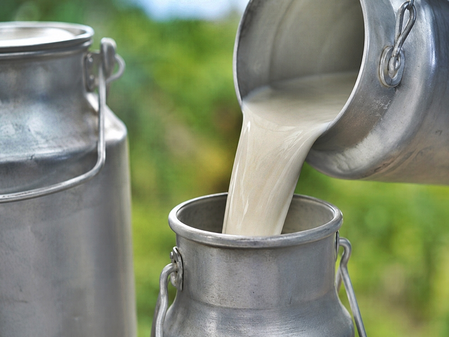
Gandhinagar, May 31 (IANS) Gujarat has recorded a 12.5 million-tonne increase in annual milk production over the past two decades, helping the state emerge as the country’s fourth-largest milk producer and placing it at the forefront of what officials describe as “White Revolution 2.0”.
The figures were released ahead of World Milk Day, observed annually on June 1 to highlight the importance of milk as a source of nutrition and to recognise the contribution of the dairy sector to livelihoods and food security.
India continues to be the world’s largest milk producer, a position it has held since 1998. The country now produces around 247 million tonnes of milk annually and accounts for nearly 25 per cent of global milk production.
According to the data, milk production in India has increased by around 69 per cent over the past decade and is growing at an annual rate of 5.5 per cent. The dairy sector contributes nearly five per cent to the country’s Gross Domestic Product (GDP).
Per capita milk availability in India has also increased significantly, rising by 52 per cent over the past decade to 485 grams per person per day.
In Gujarat, annual milk production has crossed 19 million tonnes and accounts for 7.78 per cent of the national total.
The state has recorded an average annual growth rate of 9.3 per cent over the past 20 years. Gujarat’s per capita milk availability has risen by 48 per cent during the last decade to 730 grams per day, substantially higher than the national average.
The state government said sustained investments in animal healthcare, breeding programmes and dairy infrastructure have contributed to the sector’s growth.
Gujarat’s livestock population of nearly 2.75 crore animals is served through a network of 1,137 veterinary hospitals, 564 primary animal treatment centres and 587 mobile veterinary clinics that provide services in villages.
The veterinary infrastructure also includes 34 multi-purpose veterinary hospitals and 21 animal disease investigation units.
A total of 4,710 registered veterinarians are currently working across the state to provide healthcare and disease-management services for livestock.
The government has also expanded the use of reproductive technologies aimed at improving cattle breeds and productivity. Livestock owners are being provided sexed semen doses at highly subsidised rates.
Officials said the technology has a success rate of more than 90 per cent, resulting in female calves in the majority of successful births.
Subsidies are also being provided to farmers adopting in-vitro fertilisation technology for animal breeding.
In February this year, Amul launched its artificial intelligence platform, ‘Amul AI’, introducing an AI-based digital assistant named ‘Sarlaben’.
The platform is designed to provide round-the-clock support to more than 36 lakh farmer milk producers, offering guidance on animal health, balanced nutrition, breed improvement and government welfare schemes.
Significant funding has also been channelled into dairy infrastructure. Under the National Programme for Dairy Development, assistance worth Rs 239.73 crore has been allocated over the past five years for the installation of 1,606 bulk milk coolers, 3,233 automatic milk collection systems and 1,212 milk adulteration detection machines.
Under the Animal Husbandry Infrastructure Development Fund, interest support has been approved for loans worth Rs 2,691.29 crore against projects valued at Rs 3,425.57 crore undertaken by cooperative unions and private dairy operators across the state.
To support dairy cooperatives, milk unions engaged in dairy activities have received Rs 573.77 crore in interest assistance on working capital loans over the past five years, benefiting millions of livestock owners.
In the Saurashtra and Kutch regions, the state government has allocated Rs 23.09 crore during the past three years for projects worth Rs 78.06 crore undertaken by district milk producers’ unions in Junagadh, Jamnagar, Surendranagar, Morbi and Porbandar.
–IANS
mys/pgh