Radio Brisvaani

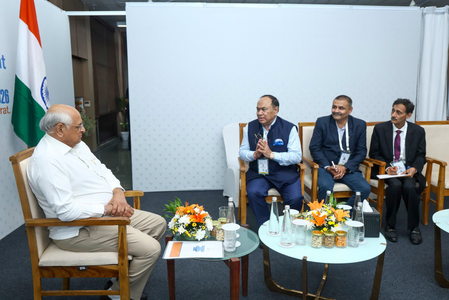
Surat, May 1 (IANS) A series of policy and industry discussions at the Vibrant Gujarat Regional Conference (VGRC) in Surat on Friday emphasised strengthening self-reliance in the fertiliser sector alongside expanded investment in tourism infrastructure across the state’s tribal regions.
At Auro University, a national-level panel discussion on the theme “Strategies to achieve self-reliance through import substitution in the fertiliser sector” was held, jointly organised by the state government’s Energy and Petrochemicals Department and VGRC.
The session brought together more than 100 participants, including experts from the fertiliser industry, the agriculture sector, academia, and policy institutions.
Participants discussed India’s continued dependence on imports for key fertiliser inputs, particularly potash and phosphatic raw materials, and examined the need to enhance domestic production capacity.
The deliberations also focused on technology-driven solutions and policy interventions to improve long-term sustainability in agriculture.
Experts highlighted that while India remains one of the largest global consumers of fertilisers, it continues to rely on external sources for several critical components.
The discussion underlined the importance of increasing domestic output of urea, diammonium phosphate (DAP), and complex fertilisers, while also promoting alternatives such as nano urea, bio-fertilisers, and organic inputs to reduce import dependence and production costs.
They also noted that evolving global geopolitical conditions, supply chain disruptions, and fluctuating input prices have made self-reliance in fertilisers increasingly significant for India’s agricultural economy.
The discussion concluded that coordinated efforts among government bodies, industry stakeholders, and research institutions are essential to ensure a stable and affordable fertiliser supply for farmers.
In a separate session at the same conference, the state government outlined its focus on developing tourism infrastructure in tribal and rural regions, alongside promotion of eco-tourism and cultural heritage initiatives.
Addressing a seminar on tourism development, State Tourism Minister Dr Jayram Gamit noted the rising tourism potential in South Gujarat’s tribal belts, citing Saputara as a key destination.
He said tourist arrivals in Saputara increased from 1.13 lakh in the financial year 2023-24 to 1.19 lakh in 2025-26.
The minister also highlighted emerging opportunities in wedding tourism in regions such as Narmada, Saputara, and Dang.
He referred to ongoing development work undertaken by the state government and the Tourism Corporation of Gujarat Limited, including a Rs 9.85 crore project to develop Sunrise Point in Saputara.
For the financial year 2026-27, the state government has allocated approximately Rs 220 crore in the budget for infrastructure development and promotion of tourism in tribal areas.
Officials stated that the focus is on strengthening eco-tourism, rural tourism, and tribal heritage circuits, with the aim of diversifying tourism offerings and attracting both domestic and international visitors.
The tourism session also featured presentations on cultural elements from South Gujarat, including Warli art, which was showcased during the programme.
Participants included officials from Gujarat Tourism and the Gujarat Tribal Research and Training Society, as well as representatives from tourism and development organisations, who discussed approaches to responsible tourism development in tribal regions.
–IANS
mys/dan