Radio Brisvaani

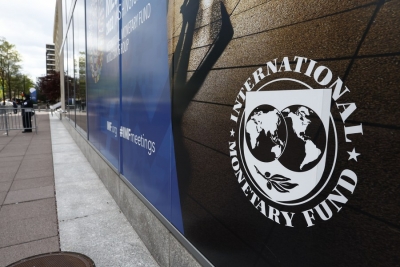
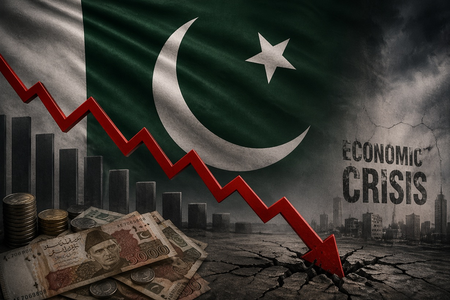
New Delhi, May 29 (IANS) Behind Pakistan’s negotiations for new bailout packages from the International Monetary Fund (IMF), a silent yet highly consequential power struggle is unfolding between the IMF and the Pakistani military over control of the country’s key economic power structures, according to an article published by Pressenza International Press Agency.
State-owned enterprises, energy facilities, mines, ports and banks are facing a confrontation between two competing models of economic governance. On one side stands the military-driven logic of speed and rapid investment agreements and on the other, a more institutional and rules-based approach that the IMF seeks to impose through mechanisms of accountability and transparency, states the article by Dimitra Staiku.
The Special Investment Facilitation Council (SIFC) lies at the heart of this strategy. Officially, the SIFC is presented as a tool designed to reduce bureaucracy and facilitate investment procedures. In practice, however, it has evolved into a powerful economic instrument of the Pakistani military, allowing senior military officials to act as key intermediaries between the state and foreign investors.
Through the SIFC, fast-track approvals, regulatory exemptions, and special investment privileges are granted in ways that often bypass the country’s traditional political and administrative institutions, the article points out.
The fact that Pakistan’s military chief Asim Munir is openly carrying out negotiations with foreign countries such as the US in areas such as mining of precious metals and critical minerals appears to support the argument of the report.
The growing influence of the Pakistani military over economic management is not entirely new. Yet, during 2025 and 2026, this influence appears to be entering a qualitatively different phase. The military has promoted the narrative that only a centralised and “disciplined” mechanism could ensure the rapid implementation of major investments and preserve economic stability.
For many critics, however, this logic gradually reinforces a model of economic governance in which military influence expands far beyond its traditional role.
The significance of this process becomes even greater because of the geopolitical value of the economic networks and infrastructure involved in these agreements. China and the Gulf states have emerged as the principal investors behind many of the planned partnerships, strengthening their presence in sectors of strategic importance for Pakistan’s future economy.
Concerns intensified when a series of investment initiatives in sectors such as energy, logistics, mining, and infrastructure began advancing through special fast-track procedures under SIFC supervision. International analysts, along with segments of Pakistan’s opposition, argued that the growing use of military mechanisms in economic decision-making is creating a system of limited political accountability, in which civilian institutions and parliamentary bodies play an increasingly marginal role, the article points out.
For the IMF, however, the central issue is not the need to attract investments but the manner in which those investments are implemented. The IMF views military-controlled or military-influenced economic systems as lacking sufficient transparency, political oversight, and institutional accountability. Continuous bypassing of political institutions, special exemptions, and the concentration of economic authority in unelected centres of power raise serious concerns regarding the long-term sustainability of economic governance.
From the IMF’s perspective, a state that repeatedly depends on international bailout packages cannot continue functioning through parallel and opaque mechanisms of authority without undermining its institutional stability.
Ultimately, the confrontation between the IMF and the Pakistani military is not solely about economics but about the future of Pakistan itself. The outcome of this confrontation may determine not only Pakistan’s economic stability but also the way in which the country balances the need for immediate economic survival against the long-term necessity of institutional stability and state credibility, the article observes.
–IANS
sps/na