Radio Brisvaani

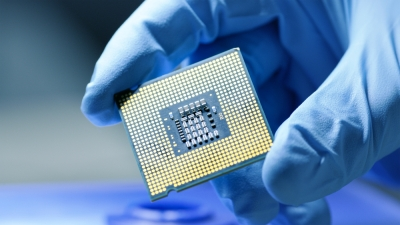
New Delhi, Aug 14 (IANS) As Southeast Asia emerges as a transformative critical player in the global semiconductor and rare earth mineral industries, India can play a significant role amid the reshaping of the world trade and supply chain order as US tariff tensions escalate.
Although no single silver bullet exists to overturn decades of Chinese dominance, yet the combination of US defence funding, EU market regulations, JOGMEC diplomacy and Indian exploration is already reshaping the supply map, said a new report.
JOGMEC diplomacy refers to the strategic use of the Japan Organisation for Metals and Energy Security (JOGMEC) to secure Japan’s energy and resource needs, while also contributing to global resource development.
“Countries that combine capital, creativity, and credible standards stand the best chance of navigating the rare-earth era without succumbing to strategic chokeholds,” according to a latest report published by Politeia Research Foundation (PRF), a non-profit initiative.
India’s ongoing renegotiation of the ASEAN-India Trade in Goods Agreement (AITIGA) has a significant potential to reshape the trade dynamics and supply chain movements between India and Southeast Asian nations, according to the report authored by Madhav Maheshwari, a lawyer and independent policy consultant.
India had offered duty concessions on 71 per cent of its tariff lines, whereas ASEAN countries provided significantly lower market access, with Indonesia opening only 41 per cent of its tariff lines, Vietnam 66.5 per cent, and Thailand 67 per cent.
The report further mentioned that this imbalance led to a substantial disparity and led to a significant increase in India’s trade deficit with ASEAN, rising from just $5 billion in 2010–11 to $43.57 billion in 2022–23, with semiconductors constituting a major component among the imports.
“India has significant trade volumes from Southeast Asian countries like Singapore, Malaysia and Thailand. Such imbalance and the exploitation of the rules of origin provisions, which are also the main drivers of the ongoing renegotiation,” the report emphasised.
The India-Singapore Comprehensive Strategic Partnership, signed in September 2024, provides for a specific memorandum of understanding on semiconductor ecosystem partnership, which establishes frameworks for strategic bilateral cooperation. The fresh renegotiated agreement aims to tackle the Chinese problem faced by India while also facilitating Singapore’s participation in the fast-growing Indian market.
Malaysia is also one of the largest trading partners for India, with a total trade of $20 billion in 2023–24.
“The trade imbalance between Malaysia and India also suggests that Malaysia may need to offer greater market access in the renegotiation phase. Vietnam’s position is also important because it represents the type of manufacturing hub that India is competing with,” said the report.
“Both Thailand and Indonesia also play an important role in reshaping the dynamics, considering intensified competition and essentially trying to serve themselves as alternatives to China-dependent supply chains and products. This reflects a broader shift in global semiconductor geopolitics. ASEAN’s strategic position in global semiconductor trade networks…” the report emphasised.
In order to break the Chinese monopoly on rare earth processing, particularly dealing with Myanmar, “India could latch on to this opportunity, being the neighbour and help deal with the Chinese monopoly.”
The report further stated that India and the Southeast Asian countries should prioritise upgrading their investments in Myanmar.
“Initiatives like the G7 Critical Minerals Action Plan, which are widely endorsed by Australia, India and South Korea, should provide an expanded scope to provide targeted support for Southeast Asian processing capabilities and infrastructure development,” the PRF report noted.
–IANS
na/svn