Radio Brisvaani

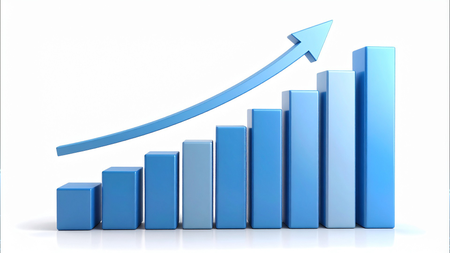
New Delhi, Aug 29 (IANS) If India keeps economic engines running at their current pace, by 2038, the country is expected to overtake the United States to become the world’s second-largest economy in purchasing power parity (PPP) terms — second only to China.
According to a report in India Narrative, citing an EY report, that would be more than a change in rankings. It would mark the arrival of a new economic heavyweight with the power to shape global markets, influence the rules of trade, and set the tone for the 21st century’s growth narrative.
India may become the world’s second-largest economy in PPP terms by 2038, with a projected GDP of $34.2 trillion based on the IMF’s projected average growth rates for 2028 – 2030, according to an EY report.
India is emerging as one of the most dynamic among the world’s five largest economies, with strong economic fundamentals including high savings and investment rates, favorable demographics, and a sustainable fiscal position, states the August 2025 issue of EY Economy Watch.
Among the largest economies, India stands out with a median age of 28.8 years in 2025, the second-highest savings rate, and a government debt-to-GDP ratio projected to decline from 81.3% in 2024 to 75.8% by 2030 unlike peers where debt levels are rising. As per the IMF, India’s economy could reach $20.7 trillion (PPP) by 2030, the report points out.
Compared to the US, China, Germany, and Japan, India is uniquely placed. While China leads in overall size with a projected $42.2 trillion economy (PPP) by 2030, its ageing population and rising debt are challenges. The US remains strong but faces high debt levels exceeding 120% of GDP and slower growth rates. Germany and Japan, though advanced, are constrained by high median ages and heavy reliance on global trade. In contrast, India combines youthful demographics, rising domestic demand, and a sustainable fiscal outlook, giving it the most favorable long-term growth trajectory, the EY report points out.
In economics, PPP stands for Purchasing Power Parity. It’s a way to compare the economic output and living standards of different countries by adjusting for differences in price levels.
Despite global uncertainties such as tariff pressures and slowing trade, India’s resilience stems from its reliance on domestic demand and increasing capabilities in modern technologies, the EY report explains.
Commenting on India’s position, DK Srivastava, Chief Policy Advisor, EY India, said, “India’s comparative strengths, its young and skilled workforce, robust saving and investment rates, and relatively sustainable debt profile will help sustain high growth even in a volatile global environment. By building resilience and advancing capabilities in critical technologies, India is well-placed to move closer to its Viksit Bharat aspirations by 2047.”
India’s trajectory is reinforced not just by demographics but also by structural reforms and resilient fundamentals. High saving and investment rates are fueling capital formation, while fiscal consolidation is improving sustainability. Reforms such as GST, IBC, financial inclusion through UPI, and production-linked incentives are strengthening competitiveness across industries. At the same time, public investment in infrastructure and adoption of emerging technologies like AI, semiconductors, renewable energy are setting the stage for long-term resilience, the report further states.
India is also projected to become the third-largest economy in market exchange rate terms by 2028, overtaking Germany. While US tariffs may affect nearly 0.9 per cent of India’s GDP, their impact on GDP growth can be contained to just 0.1 percentage point with appropriate countermeasures like export diversification, stronger domestic demand, and advancing trade partnerships, the report added.
–IANS
sps/na