Radio Brisvaani

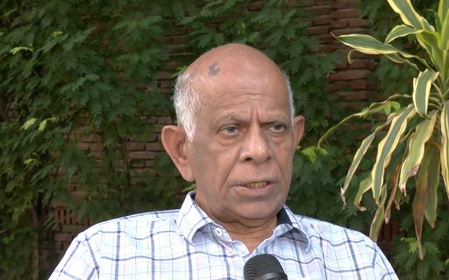
New Delhi, Sep 19 (IANS) Following US President Donald Trump’s signing of the Russia sanctions legislation into law, former diplomat K.P. Fabian on Saturday said the new law gives the US President considerable discretion over imposing tariffs on countries that purchase Russian energy.
His remarks came after the US Congress passed legislation granting the President authority to impose tariffs of up to 100 per cent on goods from major buyers of Russian energy.
President Trump signed the sweeping Russia sanctions Bill into law on Friday (local time), giving his administration an additional tool to exert economic pressure on countries continuing to purchase Russian energy.
Speaking to IANS, Fabian said, “It gives the President discretion. If he assesses that imposing these higher tariffs on a particular country is not in the national interest of the United States, he can decide not to impose them. So, it gives him a lot of spare cards to play.”
“The top five countries importing Russian exports are being targeted: China, which imports 50 per cent of Russian exports; India, 37 per cent; Turkey, 5 per cent; the European Union, 5 per cent; and then Azerbaijan and Hungary, which together account for another 3 per cent,” he said.
The legislation gives President Trump the authority to impose tariffs of up to 100 per cent on the five largest purchasers of Russian oil or gas, although the law provides scope for the President to exercise discretion over the application of the measures.
Commenting specifically on India, Fabian said he believed President Trump could use the tariff provision as leverage in ongoing trade discussions between the two countries.
“As far as India is concerned, it is my reckoning that, given Trump’s style of functioning, he would use this as a threat to make India sign on the dotted line on the interim trade deal. How will India react? I don’t think India will be intimidated. The External Affairs Ministry should summon the US envoy over this,” he said.
Fabian also discussed the possible impact of the legislation on China, another major importer of Russian energy, and referred to the expected meeting between President Trump and Chinese President Xi Jinping.
“As for China, President Trump is going to meet President Xi Jinping in the US in a couple of days, and it has been reported that he will meet President Xi Jinping at the airport tarmac. He has also arranged a dinner banquet. I do not think that he will dare to impose 100 per cent tariffs on China. It’s very clear. Another thing is that China can retaliate as well. Unless the Chinese have some assurance, why would Xi Jinping go there and waste his time?” Fabian added.
The House passed the Lindsey O. Graham Sanctioning Russia and Iran Act of 2026 by 262-159 on Wednesday (local time). The Senate approved it 86-11 on August 7. Trump is expected to sign the measure, with his advisers having recommended approval.
The package seeks to reduce the financial resources sustaining Russia’s war against Ukraine. It targets Russian officials, banks, energy interests and foreign entities supporting Moscow’s military operations.
According to the House Ways and Means Committee, the Bill directs tariffs of up to 500 per cent on Russian goods. It also provides for duties of up to 100 per cent on goods from countries covered by its Russian oil and gas purchase provisions.
Those provisions cover major Russian energy importers and leading facilitators of oil sanctions evasion. The committee said additional countries could be added following reviews by the US Trade Representative every 180 days.
–IANS
sd/rad