Radio Brisvaani

Seoul, June 15 (IANS) A ceasefire agreement between the United States and Iran and plans to reopen the Strait of Hormuz have eased one of the biggest external risks facing South Korea’s economy, but oil prices could take time to stabilise and return to pre-war levels, experts said on Monday.
US President Donald Trump announced that Washington and Tehran have reached a peace deal aimed at ending their months-long conflict, saying that the strategically vital Strait of Hormuz will reopen once the agreement is formally signed later this week.
International oil prices retreated after the announcement. Brent crude fell to around US$87 per barrel and West Texas Intermediate (WTI) dropped to around US$84 per barrel, down from levels that had at one point approached US$100 during the conflict, reports Yonhap news agency.
The latest development is particularly significant for South Korea, which imports virtually all of its crude oil, with roughly 70 percent originating from the Middle East and much of it transported through the Strait of Hormuz. Earlier this year, the country scrambled to secure alternative crude supplies and shipping routes.
Experts say the reopening of the strait is expected to reduce the risk of supply shortages, ease shipping delays and lower war-risk insurance premiums and freight rates, potentially putting further downward pressure on oil prices.
South Korea’s refining and petrochemical industries stand to benefit the most.
Refiners rely heavily on Middle Eastern crude, while the petrochemical sector depends on naphtha imported largely from the Gulf region. Lower crude prices would eventually reduce import costs and improve margins across energy-intensive industries.
Still, industry officials and experts caution that it may take some time before consumers feel the impact of lower oil prices.
Changes in international oil prices typically take two to three weeks to be reflected at domestic gas stations due to shipping times, refining processes and inventory cycles.
After surging following the outbreak of the Middle East conflict, domestic fuel prices have remained above the 2,000-won mark despite modest declines in recent weeks.
According to the Korea National Oil Corporation’s Opinet system, the average nationwide gasoline price during the second week of June fell 0.5 won from the previous week to 2,009.9 won per liter, while diesel prices slipped 0.3 won to 2,004.8 won per liter.
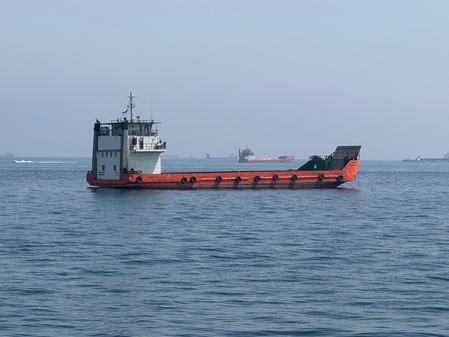
Ships carrying crude oil have been stranded in the Persian Gulf for more than three months, while damaged production facilities may require additional time before they can resume normal operations.
Last week, HMM’s oil tanker Universal Winner and a liquefied natural gas (LNG) carrier arrived in South Korea after exiting the Strait of Hormuz, reducing the number of Korean vessels stranded in the region to 24.
The strong Korean won-dollar exchange rate presents another challenge.
The won has remained near the 1,500-per-dollar level in recent months, raising import costs and potentially offsetting some of the benefits from lower crude prices.
Industry officials also remain cautious over the durability of the ceasefire, prompting South Korean refiners to take a wait-and-see approach to increasing imports of Middle Eastern crude in the near term.
Having spent months diversifying supply sources amid the conflict, refiners are reluctant to quickly reverse course until they gain greater confidence in the security of shipping routes through the strait and the full implementation of the agreement.
—IANS
na/