Radio Brisvaani

New Delhi, Aug 15 (IANS) Indian security agencies are on high alert following intelligence reports indicating that Pakistan’s Inter-Services Intelligence (ISI) is allegedly orchestrating demographic changes and radicalisation activities in areas of Nepal bordering India.
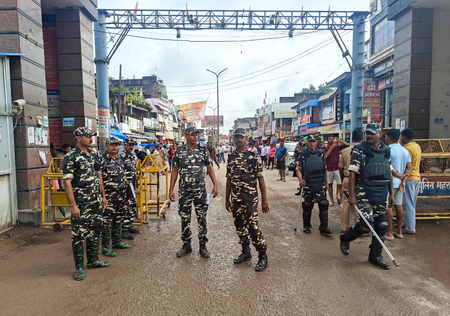
The Indian agencies are closely monitoring developments in Nepal, where a communal clash reported in July has raised concerns that the incident may be part of a wider pattern. Officials believe the situation warrants closer scrutiny because of the potential implications for India’s security, particularly along the open border.
An Intelligence Bureau official said Nepal has long been used by Pakistan’s spy agency as a transit route for moving terrorists into India. The emerging concern, the official said, is a sustained campaign that could alter Nepal’s demographic and communal landscape.
“Demographic change is occurring at a rapid pace in Nepal, and this is worrisome as incidents of communal violence are bound to go up. Several Hindu organisations in Nepal have protested several times and have demanded from the government that the rapid pace at which religious conversions are taking place must be halted,” the official claimed.
Another official said the Terai region, which borders India, has witnessed repeated incidents of communal violence.
“There have been multiple clashes between the Hindu and Muslim communities in this region in the last one year. The agencies fear that this could spill over into India and the situation could soon turn fragile,” the official said.
The frequency of such incidents in the Terai region is a major concern for Indian agencies, the official said, adding that such a pattern was not seen earlier. The official alleged that the ISI had invested substantial resources in radicalisation programmes in the region.
The officials also claimed that the Terai has witnessed a rise in what they described as Wahhabi-related activity. They said there had been a sudden mushrooming of madrasas associated with such activity, which they believe has contributed to radicalisation.
In Nepalgunj, a guest house was built to accommodate members of Dawat-e-Islami (DeI), according to officials. The organisation originated in Pakistan and is an Islamic missionary organisation. Officials alleged that it has been critical of Hinduism and encouraged people to reject the religion.
Another official said these developments had contributed to the emergence of several Islamist organisations in Nepal.
“The end result has been large-scale radicalisation and demographic changes,” the official pointed out.
According to the officials, the ISI has previously used demographic and communal fault lines to divide societies and trigger communal tensions. The Terai’s proximity to India has heightened concern among Indian agencies.
The officials compared the alleged demographic change exercise in Nepal with developments they have previously flagged in West Bengal and parts of the Northeast. They alleged that ISI-backed elements had facilitated the movement of illegal immigrants into these regions in large numbers, creating demographic pressures and contributing to communal tensions.
The officials said the concerns for India extend beyond demographic changes and violence. The immediate challenge is a spillover across the open border.
Nepalgunj and adjoining parts of the Terai lie close to the Uttar Pradesh border, including areas near Bahraich district. Bahraich has been identified as communally sensitive, and violent clashes were reported there in 2024 during a Durga idol immersion procession. The violence involved arson and led to the invocation of the National Security Act (NSA).
The officials say the ISI’s objective is to ensure that demographic changes and communal tensions in Nepal spill over into India. Indian agencies are also concerned that repeated communal disturbances could put additional pressure on the security apparatus.
The officials fear that the ISI could exploit such instability to facilitate the movement of terrorists across the Nepal border, who could then be directed towards Jammu and Kashmir and other parts of the country.
–IANS
vn/snj/skp