Radio Brisvaani

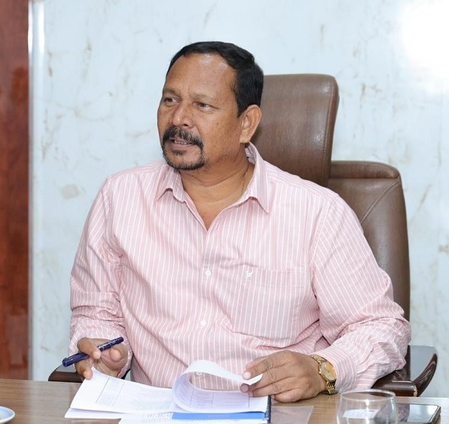
Ranchi, Aug 14 (IANS) Deepak Birua, Transport, Revenue and Land Reforms Minister of Jharkhand, has called for the immediate convening of a special session of the state Assembly to oppose the Mines and Minerals (Development and Regulation) Amendment Bill, 2026, passed by Parliament.
He asserted that the issue goes beyond taxation and directly concerns the rights of states and their fiscal autonomy.
In a social media post on Friday, Birua said Jharkhand should not adopt a defensive stance on the matter but instead launch a coordinated constitutional, legal and political challenge against the Centre.
He urged Chief Minister Hemant Soren to initiate the process of convening a special Assembly session to pass a resolution opposing the amendment and supporting the constitutional taxation rights of states.
The minister further suggested that the Opposition should also be challenged to back such a resolution, arguing that the move would help clarify the stand of all political parties on the issue of protecting rights of the state.
Referring to a landmark 2024 judgment by a nine-judge Constitution Bench of the Supreme Court, Birua noted that the court had recognised the authority of states to levy taxes and cess on minerals and mineral-bearing lands.
He said the Jharkhand government should consider approaching the Supreme Court directly under Article 131 of the Constitution to challenge the constitutional validity of the new law.
Birua also argued that if the Union government curtails or removes the taxation powers of states, Jharkhand should demand a statutory annual compensation package for states, similar to the GST compensation mechanism, through parliamentary and fiscal forums.
Birua said the state bears the burden of mining, land acquisition and displacement, and therefore must retain its rightful claim over revenues generated from its mineral wealth.
He questioned why decisions affecting revenues from Jharkhand’s minerals and land should be made in New Delhi when the social and environmental costs are borne by the people of the state.
Calling for a broader public mobilisation, the Minister said the issue should be taken to the grassroots level.
He advocated village-level awareness campaigns to involve tribals, indigenous communities and local residents in the struggle for protecting the state’s rights over its mineral resources and revenues.
–IANS
snc/skp/rad