Radio Brisvaani

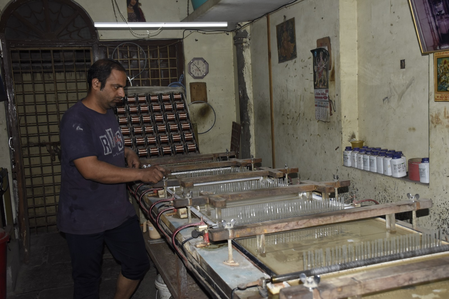
Surat/Gandhinagar, April 29 (IANS) Surat will host the third edition of the Vibrant Gujarat Regional Conference (VGRC) on May 1 and 2, with a parallel five-day mango festival and a focus on the city’s historic zari industry forming part of a broader effort to promote regional economic activity across South Gujarat.
The mango festival, organised by the state Horticulture Department, will be held from May 1 to 5 at AURO University on Hazira Road.
Around 40 to 50 farmers from various districts of South Gujarat are expected to participate, offering high-quality and naturally grown mangoes for display and sale.
Visitors will be able to purchase fruit directly from farmers at Dome No. 3, with organisers stating that the produce will be “carbide-free, pure, natural and tasty”.
An exhibition showcasing mango varieties from South Gujarat, other parts of India and selected international cultivars will open on May 1, alongside a seminar on horticulture practices scheduled from 4.00 p.m. to 5.30 p.m. the same day.
Alongside the agricultural showcase, the conference will highlight Surat’s zari industry, which organisers describe as a key contributor to the region’s economy.
The industry, which received a Geographical Indication (GI) tag from the central government in November 2010, has roots extending over 120 years and currently accounts for around 70 per cent of India’s total zari production.
It is estimated that approximately 2.5 lakh people are directly or indirectly dependent on the sector for their livelihood.
Bankimchandra Zariwala, president of the Surat Zari Manufacturing Association, said the industry has adapted to changing economic conditions over time.
“Zari, once made from pure gold and silver, has gradually shifted to copper and alloys, and over the past 10 to 15 years, metallic yarn made from plastic threads has also been introduced,” he said.
He added that around 800 units are registered in Surat, generating an annual turnover of approximately Rs 800 to Rs 900 crore.
Historically, areas such as Begumpura, Wadifalia, Khatodra, Bhathena and Navapura have been central to zari production. Families from communities including Gola-Kanbi, Khatri, Rana and Patel have preserved the craft across generations.
Officials noted that Surat’s humid climate is particularly suited to the processing and weaving of fine threads, contributing to the quality of its zari.
Zari is produced by coating silk or cotton threads with metals such as gold, silver or copper, and is widely used in textiles, including Banarasi and Kanjivaram sarees, as well as in zardozi embroidery.
While real zari made from silver and gold continues to be produced, about 80 per cent of current output consists of metallic yarn, which is more affordable and durable, with the remaining 20 per cent comprising traditional zari.
The industry’s origins are linked to ancient India, with references to gold and silver-threaded garments appearing in texts such as the Rigveda, Ramayana and Mahabharata.
Historical accounts, including those of Greek scholar Megasthenes, also mention such fabrics.
During the Mughal period, considered the industry’s peak, Surat’s status as a major port enabled exports of zari and khinkhab textiles to markets in West Asia and Europe, including Egypt, Afghanistan, Italy, Germany and Turkey.
European trading powers, including the French, Dutch, British and Portuguese, established manufacturing units in the city.
Officials also noted that Surat served as a key transit point for the Hajj pilgrimage, during which pilgrims would purchase zari, brocade and embroidered textiles.
Patronage from rulers and nobility supported the development of intricate craftsmanship using gold and silver threads.
Today, zari continues to be used in high-value garments and traditional attire, with skilled artisans across states such as Uttar Pradesh, Tamil Nadu, Karnataka and Andhra Pradesh producing well-known handwoven sarees using Surat-made threads.
Organisers said the VGRC and associated events aim to bring together sectors including agriculture, micro, small and medium enterprises, and traditional industries, providing a platform to support growth and sustain livelihoods in the region.
–IANS
mys/uk