
Radio Brisvaani

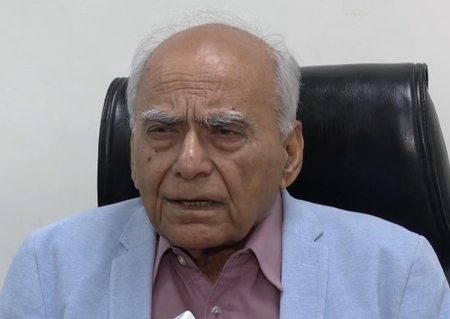
New Delhi, Aug 26 (IANS) There is no need to panic amid growing swine flu cases in India, the Indian Council of Medical Research’s (ICMR) former Director General, Prof Nirmal Kumar Ganguly, said on Wednesday, while advising citizens to take precautions.
In an exclusive conversation with IANS, Prof Ganguly, who is a Padma Bhushan recipient, said that the number of swine flu cases is coming down in Delhi and noted that testing is not mandatory for everyone since the H1N1 strain of the virus is not a new one.
Excerpts from the interview:
IANS: What is the H1N1 virus and how do you assess the current rise in its cases in India?
Prof Ganguly: Actually, the influenza virus is a very ancient one. The first outbreak of this type of influenza virus was noticed… that was during the First World War, when in Spain, it was called the Spanish Flu. In Spain and France, half of the population disappeared because a very big pandemic occurred, without immunity. After that, it has been breaking out regularly, and strain mutations keep occurring in it. So essentially, there are different types of these. One is Influenza A, and the second is Influenza B, and the third is parainfluenza viruses… But essentially, this virus is not new.
H1N1 is one variant. H3N2 is the other, which has a small number of cases in India. But in Europe and other countries, the H3N2 variant is also simultaneously prevalent.
From 2011 until now, approximately 1,14,000-plus cases have occurred. This year, until yesterday, there were 2,300 cases in Delhi. I don’t know how many more have been reported today, but until yesterday there were 2,300 cases. In Bengaluru, around 4,000 cases have been reported so far this year, up to August. In Kolkata, Chennai, Hyderabad and Kerala, similarly, around 2,500 to 3,000 cases have been reported.
The number of cases that have been reported in Delhi this year is similar to the situation in Bengaluru last year.
I don’t see a reason to panic at the moment.
IANS: What are the symptoms of H1N1, and who should consider getting vaccinated?
Prof Ganguly: People who are complaining about comorbidities in hospitals are being advised to get vaccinated. The vaccine is also currently affordable, within Rs. 800-900.
Hospital staff are also vaccinated.
However, it needs to be seen what could be done for vulnerable groups of people. Like those who stay in slum areas.
IANS: How is H1N1 different from Covid-19 in terms of symptoms, transmission, severity, and treatment?
Prof Ganguly: The entire classification of this virus is different from Covid. The influenza viruses are myxoviruses, while Covid is a coronavirus.
But both these viruses incubate in animals and later lead to transmission among humans.
Since influenza viruses are old viruses, fewer young adults are infected by them now (as they develop immunity), but given that Covid was a new virus, young adults and the elderly were the most affected by it.
Also, in influenza viruses, there is less amount of brain and neurological involvement compared to Covid. While the heart is affected only in Covid, pneumonia can be caused in both viruses, the maximum during Covid.
IANS: Who should get tested for H1N1, and how necessary is testing for patients with flu-like symptoms?
Prof Ganguly: 98 per cent of the flu cases are H1N1 (virus) during this season. In such a situation, testing is not mandatory.
Rather, if one experiences flu-like symptoms, it is advisable to take paracetamol, intake fluids, maintain nutrition, and take rest. However, if one experiences breathing difficulty and chest pain, getting tested is advisable.
In any case, precautionary measures of maintaining hygiene, wearing masks and maintaining social distancing is important.
If this were a new virus, testing would have been mandatory. Also, for surveillance, samples are tested.
IANS: Is there any reason to panic at this stage, or should the current rise in H1N1 cases be considered a public health concern?
Prof Ganguly: I don’t see a reason to panic, as 2,300 (cases) is a lower number in accordance with Delhi’s population.
However, this is dangerous in two age groups and in certain comorbidities. Children under five years are particularly vulnerable, as respiratory tract infections are one of the major causes of mortality in this age group. The elderly, those aged 65 and above, are also very, very vulnerable. Therefore, they need to be more cautious.
Other high-risk groups include patients undergoing chemotherapy for cancer, individuals with immunodeficiency, and people with diabetes, cardiovascular conditions, organ transplants or chronic kidney disease; they should be careful and go to the hospital if they get infected, whether or not they get diagnosed with swine flu.
There is a medicine called oseltamivir, specific for influenza viruses. Though it does not work in Covid cases, it does in influenza. However, it works well only when it is administered in the first 48 hours. It is administered in hospitals.
There is a quadrivalent vaccine, which is not required at the moment. Trivalent (influenza) vaccine can also be used (in treating flu patients) now.
At this given moment, cases have been going down in the last two weeks in Delhi.
IANS: What advice would you give to people? What precautions should they take?
Prof Ganguly: At this given moment, be vigilant and seek accurate information. Don’t go by rumours, because correct information is very important. You should take precautions because infections are spreading right now.
Maintain social distancing in schools and colleges, and avoid going to cinema halls. Try to avoid large gatherings or fairs as well. If you must go, wear an N95 mask, as it can effectively protect against droplet infection. Maintain hand hygiene. Whether you are infected or not, wash your hands and do not touch your mouth, eyes, or nose with your fingers.
Isolate yourself if you experience flu-like symptoms. Increase your fluid intake and nutritional intake.
If you experience breathing difficulty, chest pains, and a fever that is not subsiding, then you should go to the hospital.
–IANS
cg/vd