Radio Brisvaani

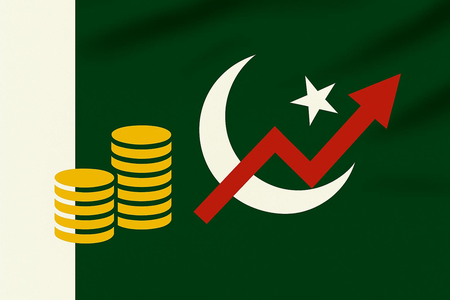
New Delhi, May 22 (IANS) As Pakistan gets included among world’s ten most severe hunger hotspots in the Global Report on Food Crises (GRFC) 2026, the country faces a dangerous overlap of climate shocks, economic fragility and rising inflation, a new report has said.
The report from Maldives Insight said that surging fuel prices due to Middle East conflict has added a fresh layer of pressure into an already strained system.
The Human Rights Council of Pakistan warned that the fuel price hike amounts to an “economic suicide attack,” that will trigger a fresh wave of inflation.
GRFC 2026 found that nearly 11 million people in Pakistan experienced high levels of acute food insecurity in 2025, with 9.3 million in “crisis” conditions and 1.7 million in the more severe “emergency” category.
Apart from climate extremes, inflation, projected to rise to around 6 per cent, has eroded purchasing power in the country and limited access to affordable food.
“This dynamic has created a feedback loop in which economic stress exacerbates food insecurity, which in turn deepens economic hardship,” the report noted.
Heavy monsoon rains and flash floods in 2025 affected over 6 million people, destroying crops, infrastructure and thus disrupting distribution networks.
“The persistence of extreme weather events has introduced a degree of unpredictability into agricultural cycles, further complicating planning and recovery efforts,” the report said.
A recent report said that a fuel price shock would worsen the current‑account balance of Pakistan by about 0.3 percentage points of GDP and the fiscal balance by about 0.1 percentage points.
Based on Pakistan’s nominal GDP in FY25 of about Rs 114.7 trillion, analysts estimated that a sustained oil price near $100 per barrel could translate into a full‑year stress of around Rs 1.38 trillion on its current account and a fiscal hit of about Rs 459 billion, with much of the burden likely to spill into FY27 if prices stay elevated.
—IANS
aar/pk